Camping
Zero Gravity Chairs for Car Camping - Are They Worth It?
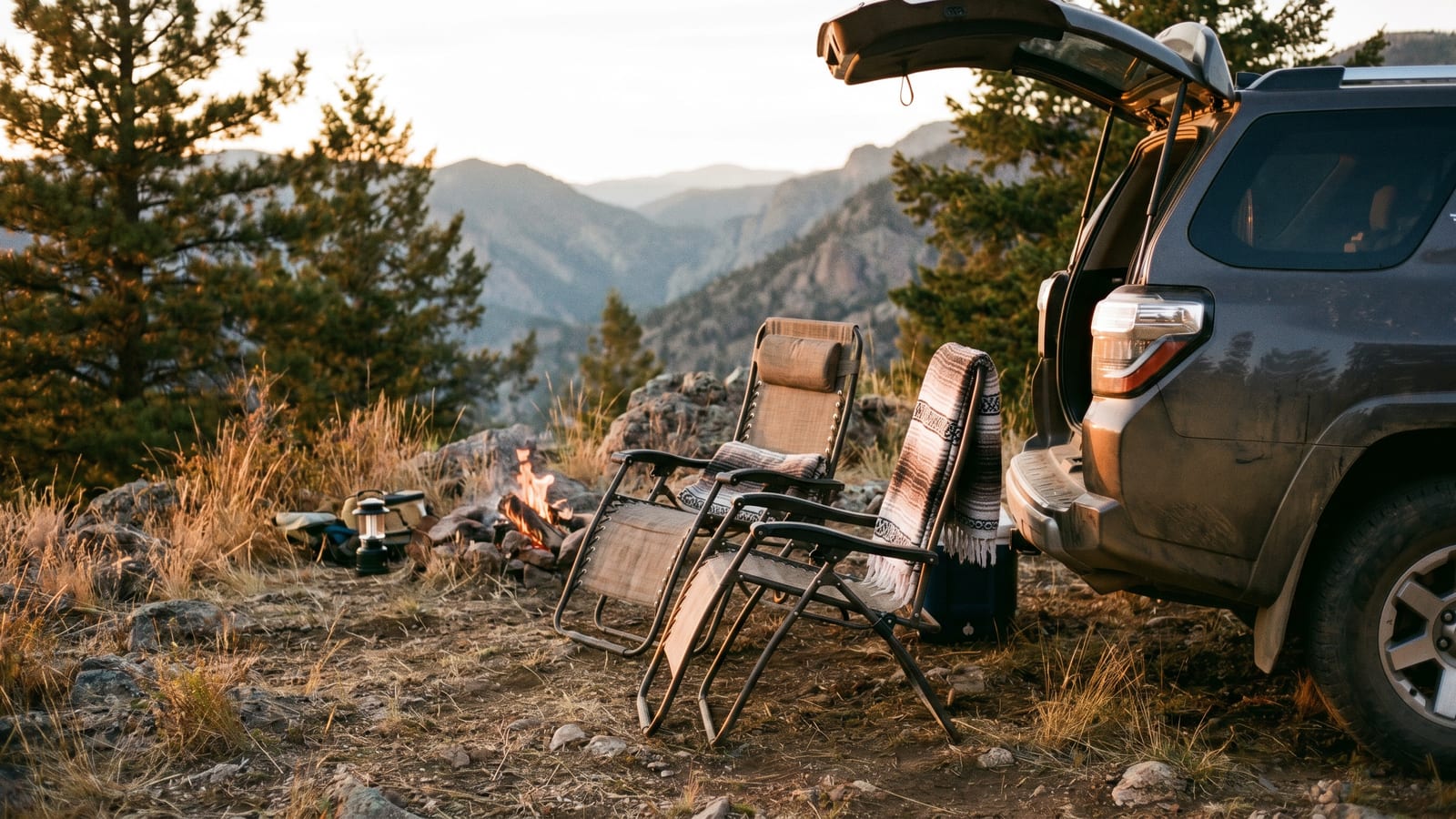
Zero gravity chairs are reclining outdoor chairs that elevate your legs to heart level, distributing your weight evenly across the frame. They are the most comfortable seat you can bring to camp, but they come with real tradeoffs in weight, bulk, and practicality that don’t make sense for every setup.
What Is a Zero Gravity Chair?
The name comes from NASA. Astronauts sit in a specific reclined position during launch, legs and torso at roughly a 128-degree angle, because it distributes gravitational load evenly across the spine and reduces the stress of high-G forces. Zero gravity chairs borrowed that geometry. When you recline into the zero-G position, your legs sit level with your heart, your spine decompresses, and pressure on your lower back drops significantly.
That same physics applies on the ground. In a standard camping chair, your weight sits on your sits bones with a gap under your thighs. In a zero gravity chair, the reclined angle distributes your weight across the full length of the frame. Your joints unload, your circulation improves, and you feel lighter. This is why people who use these chairs regularly tend to evangelize them.
Car campers specifically benefit more than backpackers. You’re hauling gear from a parking area, not a trailhead, so a 22-pound chair is just another item in the trunk rather than ounces you’re counting.
The Comfort Case - Why Campers Love Them
The zero gravity position does something a standard camping chair cannot: it actually makes you feel better after you’re done sitting. Improved circulation from leg elevation reduces the swelling and fatigue that comes from hours of sitting upright. Lower back pressure drops because your spine is no longer fighting gravity at a 90-degree angle. For anyone who spends time at camp reading, watching the fire, or just decompressing after a long hike, this matters.
Post-hike recovery is where these chairs really shine. You’ve been on your feet all day, your knees are protesting, and you want to sit somewhere that doesn’t aggravate that. The reclined position lets your body recover while you’re still sitting there. A lot of users report that their zero gravity chair becomes the go-to spot at camp, even over camp chairs that other people brought.
If your idea of car camping involves a lot of sitting, reading, napping, watching the fire, listening to rain on the tarp, the comfort payoff is real. This is the main selling point, and it’s worth leaning into honestly: these chairs genuinely deliver on comfort.
The Tradeoffs You Need to Know First
Most articles cover the comfort case in detail and skip the rest. Here’s what they leave out.
Most zero gravity chairs run 18 to 25 pounds and fold to roughly 38 by 26 by 6 to 8 inches. For an SUV or a truck bed, that’s completely fine. For a small hatchback with a full load of gear, it might mean Tetris-ing your trunk to make room. Before you buy, check your vehicle’s cargo dimensions and think about what else you’re packing.
You cannot eat in these chairs comfortably when fully reclined. The angle makes a plate on your lap feel awkward and liquids are a genuine hazard. Most people lock the chair upright for meals, which works fine, but then you’re sitting in a heavy recliner with limited arm movement. If your camp setup revolves around a picnic table and shared meals, factor this in.
They need level ground. On sloped or rocky sites, the recline doesn’t work correctly and the chair can feel unstable. A site that would be fine for a standard camp chair might be genuinely uncomfortable in a zero gravity chair. This is the most underreported issue in the category. Find flat ground first, or accept a compromised recline.
Social dynamics suffer too. You cannot sit face-to-face with someone else in a zero gravity chair at the same recline angle. If your camp setup is social-first, cooking together, playing cards, talking around the fire with people sitting across from you, these chairs work better as a secondary seat for one person than as the primary seating for a group.
What to Look for in a Car Camping Zero Gravity Chair
Frame material is the first decision. Steel frames are durable and hold up to years of use, but they add weight, typically 20 to 25 pounds. Aluminum frames drop you to 12 to 16 pounds and still handle car camping loads fine. If you’re hauling other heavy gear, aluminum’s worth the extra cost.
Weight capacity is a real consideration that gets buried. Budget chairs often cap at 250 to 300 pounds. Larger users need to specifically look for chairs rated for 350 pounds or more. The Timber Ridge XL and similarly sized models are built for this, but budget chairs in this range often sacrifice comfort for capacity, so read the specs before you buy.
Folded size matters more than manufacturers advertise. Some chairs fold down to a flat-ish profile that’s easy to slide under a bed or behind a seat. Others fold into a bulkier shape that eats up trunk space. Measure your cargo area and compare.
Recline locking is non-negotiable. You want dual locking knobs, one on each side of the frame, that let you lock the chair at any angle. Friction-based recline (you just lean back and trust it) is not acceptable for a chair this heavy. If one knob fails, the other keeps you in place.
Fabric is almost always textilene mesh on quality chairs. It breathes, dries fast, and holds up to UV exposure. Cheap polyester fades and tears within a season or two. UV-resistant textilene is worth paying for.
Accessories are nice to have and easy to lose. Removable headrests, side trays, and cup holders fall off on the first bumpy drive. Don’t pay extra for a bundle you’ll never use, but do make sure your chair has at least a cup holder built in.
Our Top Picks for Car Camping
Best overall: Caravan Sports Infinity Zero Gravity Chair. This is the default recommendation for a reason. Steel frame, textilene mesh, dual locking knobs, 300-pound capacity, and it folds to a manageable size. At roughly 22 pounds and $80 to $100, it hits the sweet spot of comfort, durability, and price. It’s widely available, easy to find replacement parts, and the design has been refined over multiple generations.
Best for larger campers: Timber Ridge XL Zero Gravity Lounger. If the standard 25-inch-wide chair feels cramped, this is your option. Wider seat, higher weight capacity, padded fabric instead of mesh (subjective comfort preference, but many users prefer it), and an aluminum frame that keeps weight manageable. It costs more, typically $120 to $150, but if a standard chair feels like sitting in a too-small recliner, the upgrade is worth it.
Best lightweight for car camping: ALPS Mountaineering Escape Recliner or GCI Outdoors Freeform. These trade some of the heavy-duty steel frame experience for significantly less bulk, typically 15 to 17 pounds and a flatter fold. If your comfort priority is the reclining position rather than maximum padding and durability, these are the move. They’re not as plush as the Caravan Sports, but they’re easier to live with in tight spaces.
Setting Up Your Zero Gravity Chair at Camp
Find level ground first. Scan your site before you unpack. A slightly sloped site means an awkward recline. Your head will be higher or lower than intended, and the chair can feel unstable even on a mild grade.
Use a ground cloth or rug under the legs. This solves two problems: stability on dirt or grass, and preventing the legs from sinking into soft ground overnight. A small cut of tarp or an old camp rug works fine. Without it, you might wake up to a chair that’s slowly tilted into an uncomfortable angle.
Inspect the bungees before your first trip of the season. Cheap bungees stretch out over time and the chair sags. Replacement bungee cords are cheap and easy to find online. Keep a few spares in your gear kit. If your chair is sagging noticeably, replace them before you head out.
Don’t leave them out in rain. Textilene dries fine, but steel frames rust if the chair stays wet for extended periods. Bungees degrade faster in prolonged moisture too. If rain moves in, fold the chair and stash it under your vehicle or in a vestibule.
Folding tip: fold from the sides, not front-to-back. It’s less intuitive but reduces the pinch risk significantly, especially with the heavier steel-frame models.
Are Zero Gravity Chairs Worth It for Car Camping?
Yes, if you car camp with enough vehicle space, prioritize sitting comfort over portability, plan to use the chair for reading and relaxation more than cooking and socializing, and you don’t mind spending $80 to $150 on a camp chair.
No, if you pack light, car camp in small vehicles, run a social-first camp setup where the picnic table is the center of camp life, or want one chair to do everything from cooking to napping.
The honest take: zero gravity chairs are not the right answer for every car camper. But for the specific use case they serve well, a comfortable, dedicated relaxation seat at a camp where you’re spending time off your feet, nothing else in the category comes close. Figure out whether that use case matches your trips before you buy.