Camping
Level Ground Queen Size Air Mattress - Full Lineup Review
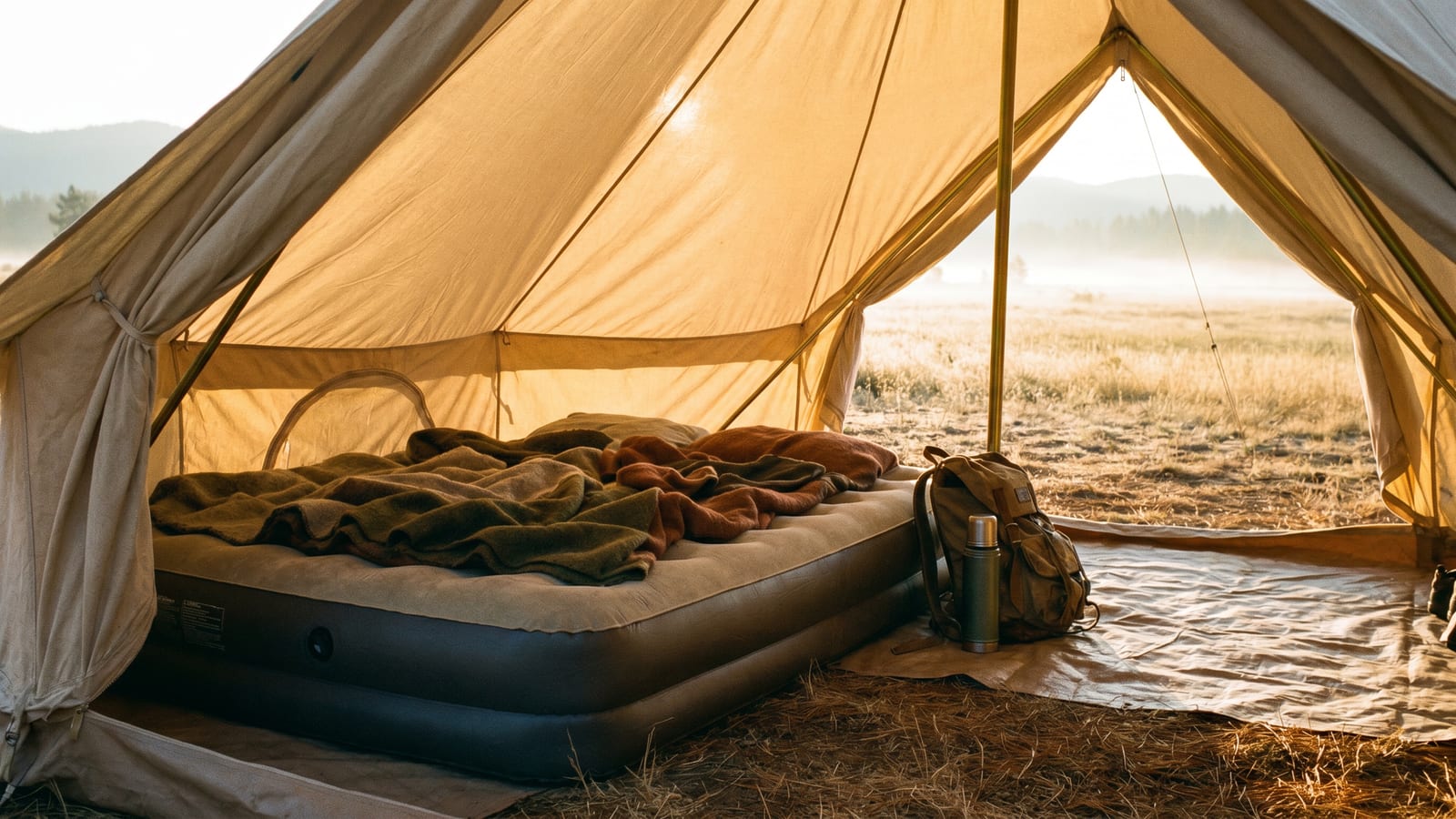
A queen-size air mattress built for the outdoors has to solve a problem that few camping sleep systems even try to address: you shouldn’t have to sacrifice sleeping space to sleep well in the backcountry. Level Ground’s queen-size lineup is one of the few that takes that trade-off seriously. This guide covers what sets these mattresses apart, which model fits which trip, and what to know before you buy.
What Makes Level Ground Different
Most camping air mattresses fall into one of two categories. You get either a lightweight backpacking pad that’s narrow and short, or a car-camping mattress that’s comfortable but heavy and bulky. Level Ground goes after the middle ground: campers who want a full queen footprint without hauling a pound-plus of mattress.
Their design philosophy centers on a wing-panel construction. Instead of one big tube running the length of the mattress, Level Ground uses overlapping fabric panels that fold into a surprisingly small package. The result is a queen-size mattress that packs down smaller than you’d expect and weighs less than the competition at equivalent dimensions.
The other meaningful difference is the inflation system. Level Ground uses a multi-port valve that lets you inflate and deflate quickly without a pump. For car camping or base camping where you’re setting up for multiple nights, that matters. You don’t want to spend five minutes huffing into a mattress after a long drive.
The Queen-Size Models
Level Ground’s queen-size options share the same basic construction philosophy but differ enough in weight, packed size, and warmth to serve different trips.
SLING
The original. The SLING is a full-length queen-size air mattress with horizontal wing panels that fold accordion-style into a carry bag. It’s the most comfortable of the lineup, with more air volume giving you more loft and more give compared to backpacking pads.
Packed size runs roughly 14 x 10 inches for a queen. Weight is around 2 pounds 6 ounces for a regular queen. That puts it well within car-camping territory, but it’s not something you’d want on a multi-mile approach.
Warmth-wise, the SLING has an R-value around 2.8 to 3.5 depending on inflation pressure. That’s enough for three-season use. Cold sleepers or ground temperatures below 40°F will want an insulated pad underneath.
SLINGWING
The SLINGWING is the more packable variant. Same queen footprint, same basic wing-panel design, but the wings are oriented differently to reduce the packed diameter. It stuffs into something closer to a wide Nalgene bottle than a rolled sleeping bag.
Weight is slightly lighter, around 2 pounds 2 ounces. The tradeoff is slightly less loft at full inflation, though most users report it feels comparable to the SLING once they’re lying on it. The R-value is similar.
If you’re splitting gear between vehicles or doing a festival setup where packability is the limiting factor, the SLINGWING wins. If pure comfort is the goal and you’ve got the cargo space, the SLING is the call.
Choosing the Right Model for Your Trip
Three factors matter most when deciding between the SLING and SLINGWING.
Weight and carry distance. If you’re walking more than half a mile from your vehicle, the SLINGWING is the better choice. At just over 2 pounds for a queen, it’s light enough that you’re not compromising your pack list significantly. The SLING is fine if your campsite is accessible by car, truck bed, or boat.
Temperature and ground conditions. Both models work well for summer and shoulder-season camping. For cold ground (late fall, early spring, high elevation), the R-value around 3 is decent but not warm enough on its own. Stack it with a foam pad underneath for added insulation and to protect against punctures from the ground.
Number of nights. For a single-night car camping trip, either model works and comfort should win. For multi-night base camping, the SLING’s extra loft pays dividends. Your back notices the difference on night three.
Setup and Inflation
Level Ground mattresses inflate without any pump. Here’s how to do it right.
- Unpack and lay flat. Find your setup spot and unroll the mattress fully. Let it sit for a few minutes to warm up the fabric. Cold material is less pliable and can resist full inflation.
- Open the inflation valve. The multi-port valve has separate intake and anti-reverse flaps. Open the cap fully. Roll the mattress from the opposite end toward the valve while pinching the wing panels closed. This forces air in efficiently without a pump.
- Top off with breaths. Once you’ve rolled in the initial volume, add three to five full breaths directly into the valve. Seal it. The mattress firms up as the air settles.
- Adjust for comfort. Add air to firm it up or open the valve to let some out and soften it. Most people overshoot and then release.
Deflation is faster: open the valve, start rolling from the valve end, and push the air out through the open port. Fold or roll, stuff into the carry bag.
Care and Longevity
A few habits extend the life of any air mattress significantly.
Use a ground cover. Even at car-camping distances, scan your site for sticks, pine cones, and sharp debris. A cheap polyethylene tarp underneath adds almost no weight penalty and protects against punctures that are impossible to find and fix in the field.
Inflate after placement. Dragging an inflated mattress across the ground is how punctures happen. Set it where you’re sleeping, then inflate.
Watch the temperature. Don’t leave an inflated mattress in direct sun. PVC expands with heat and the seams stress. If you’re breaking camp in the morning, deflate before packing if the mattress was in the sun.
Store loose, not tight. When you’re not on a trip, keep the mattress loosely rolled in a breathable bag. Compressing it for months at a time stresses the valve and seam materials.
Which One to Get
Go with the SLINGWING if packability and versatility are the priority. It’s the better all-rounder. It’s light enough for occasional backpacking use, comfortable enough for base camping, and it stuffs into a space that leaves room for other gear.
Go with the SLING if your camping is almost entirely car-based and you want maximum comfort. The extra loft and slightly larger packed dimensions are worth it when weight isn’t a concern.
Neither model is the right choice for extended backpacking trips where every ounce matters. For those, look at dedicated ultralight sleeping pads. But for the vast majority of campers who drive to their campsite and sleep for more than one night, Level Ground’s queen-size options cover the use case better than anything else in the weight class.
If you’re between the two and your budget allows, start with the SLINGWING. It’s the more flexible piece of gear and the one you’ll reach for more often.