Camping · Gear
Choosing the Right Camping Heater BTU Output for Your Tent
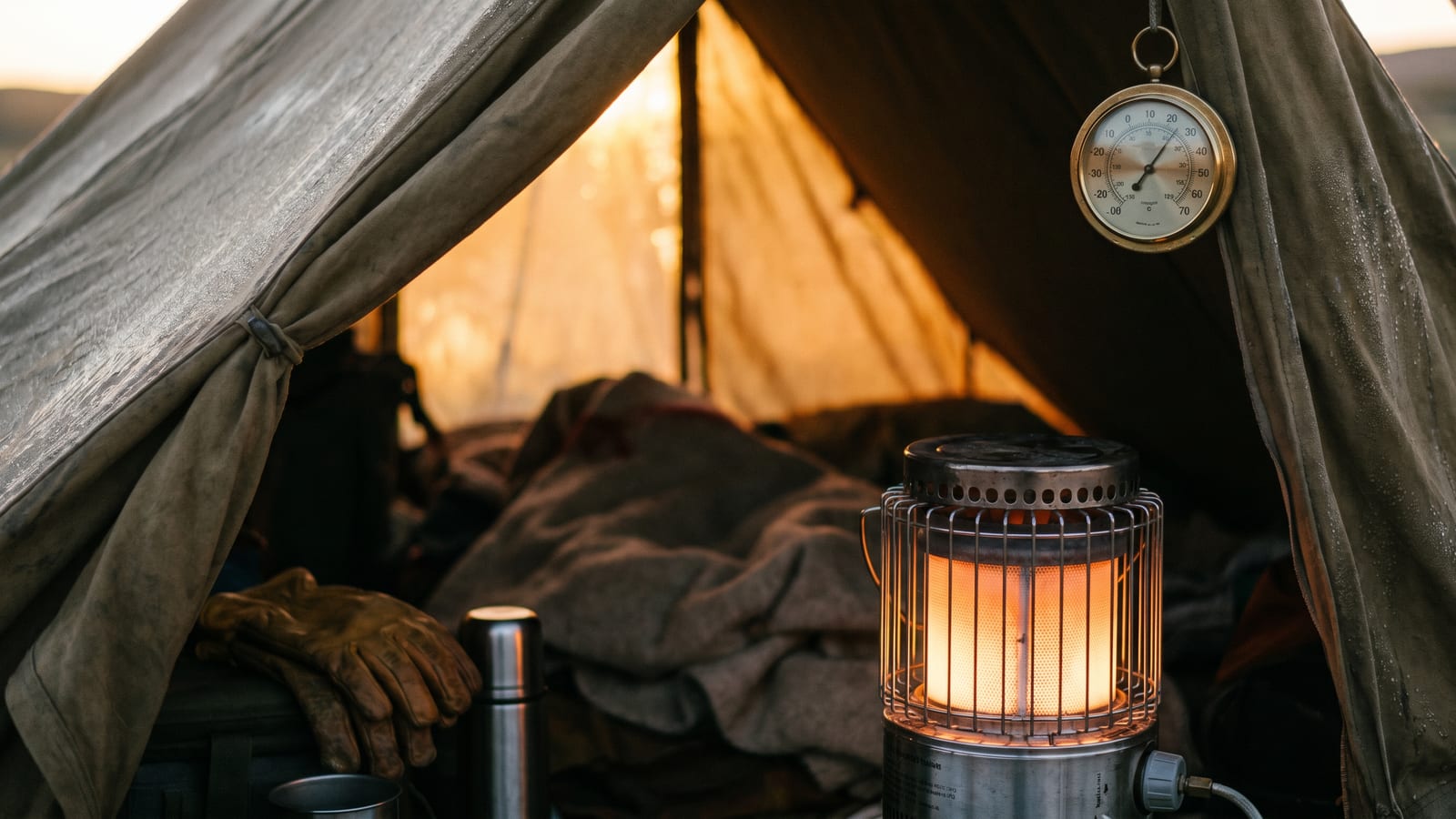
A camping heater that is too small leaves you shivering. One that is too large wastes fuel and creates dangerous carbon monoxide risks. The difference between a comfortable night and a miserable one often comes down to matching BTU output to your tent size, insulation, and expected conditions.
This is not a complicated calculation but most people skip it. Here is how to do it right.
What BTU Actually Means
BTU stands for British Thermal Unit. One BTU is the energy needed to raise the temperature of one pound of water by one degree Fahrenheit. A camping heater rated at 4,000 BTU produces 4,000 units of heat per hour.
The higher the BTU, the more heat the heater can generate. That sounds straightforward but it gets more complicated because tent insulation, outdoor temperature, and tent size all affect how many BTUs you need to maintain a comfortable temperature.
A rough baseline: you need roughly 10 to 20 BTUs per square foot of tent floor space to raise the temperature by about 20 degrees Fahrenheit in moderate wind conditions. That means a 100-square-foot tent needs between 1,000 and 2,000 BTUs for a 20-degree temperature increase.
But that baseline assumes a well-insulated structure. A tent is not well insulated. Wind strips heat from tent walls fast, and most camping tents have minimal fabric between you and outside air. You need more BTUs than the square footage formula suggests, especially in real cold.
Matching BTU to Tent Size
Here is a practical starting point for common tent sizes in moderate cold weather (temperatures above 20 degrees Fahrenheit):
| Tent Floor Area | Minimum BTUs | Comfortable BTUs |
|---|---|---|
| 50 sq ft (small 2-person) | 2,000 | 3,000-4,000 |
| 80 sq ft (medium 3-4 person) | 3,000 | 5,000-6,000 |
| 120 sq ft (large 5-6 person cabin tent) | 5,000 | 8,000-10,000 |
| 160+ sq ft (large cabin/winter tent) | 7,000 | 10,000-12,000 |
These numbers assume you are heating the tent to about 20-25 degrees above outside temperature and running the heater intermittently rather than continuously. If you want to maintain 50 degrees inside when it is 10 degrees outside, you need to move toward the higher end of each range.
Why Tent Type Matters More Than Size
Floor area is not the whole picture. A 4-person dome tent with thin nylon walls and large mesh panels holds heat much worse than a 4-person cabin tent with solid walls and smaller doors. You are heating air and the air leaks out through every seam and mesh panel.
Dome tents are the worst for heat retention. The low walls, multiple vents, and large mesh sections mean your heater works harder to maintain temperature. You need to run the heater more often and at higher output to stay warm. Look at the upper end of the BTU range for dome tents.
Cabin tents have more vertical walls and less mesh. They retain heat noticeably better. A cabin-style tent of the same floor area will require less BTU to heat to the same temperature.
Wall tents and canvas cabins are in a different category. Canvas holds heat significantly better than nylon. A properly sealed wall tent with a good heater will maintain temperature on far less BTU than a comparable nylon tent. Some people heat wall tents with 2,000 to 3,000 BTUs effectively.
Fuel Type and Heater Efficiency
BTU output per dollar varies by fuel type and heater design. The raw BTU number does not tell you the whole story.
Propane heaters are the most common and most convenient. Propane burns clean, produces good heat per unit, and is readily available. A 1-pound propane canister provides roughly 21,600 BTUs. At typical heater consumption rates of 4,000 to 10,000 BTU per hour, one small canister gives you 2 to 5 hours of heat.
The main risk with propane is carbon monoxide. Any propane heater that is not specifically designed for indoor tent use must only be used with proper ventilation. The small unvented catalytic propane heaters popular with tent campers are only safe if you crack a window or door open for fresh air exchange. Carbon monoxide is colorless and odorless. Do not take this lightly.
Kerosene heaters produce more heat per dollar than propane but smell worse and require ventilation just like propane. They are common in ice fishing and winter camping where fuel efficiency matters. The odor is a real problem inside a tent.
Electric heaters work if you have a power source. They produce no combustion gases and are the safest option where electricity is available. However, most campgrounds do not have electric hookups, so this is mostly relevant for car camping at sites with power.
Wood-burning camp stoves with proper chimney flues are the most efficient heating option for cold weather base camps. They heat effectively, dry out the tent, and eliminate carbon monoxide risk with proper flue setup. The weight and setup complexity makes them impractical for most camping situations.
Altitude and Wind Considerations
BTU output from propane decreases at altitude. At 5,000 feet elevation, propane burns less efficiently and heat output drops by roughly 10 to 15 percent compared to sea level. At 10,000 feet the reduction is more significant. If you are camping at elevation, add 15 to 20 percent to your BTU estimate.
Wind is the other variable. Even a light breeze on a thin-walled tent can cut your effective heat retention by 30 percent. In exposed campsites with constant wind, move to the higher end of your BTU range. Better yet, set up windbreaks using your vehicle, a tarp, or stacked gear to shield the tent from direct wind exposure.
Safe Heating Practices
No BTU calculation matters if you create a safety hazard. The rules are simple and non-negotiable.
Never run an unvented combustion heater while sleeping without a carbon monoxide detector. This includes propane heaters, kerosene heaters, and any fuel-burning appliance inside an enclosed space. A CO detector is not optional when heating a tent.
Provide ventilation even when using catalytic heaters rated for indoor use. Crack a window or door open at least an inch. Combustion uses oxygen and produces moisture. Both are problems in a sealed tent.
Keep the heater on a stable, flat surface away from fabric. Fabric touching a heater element is a fire risk. Clear the area around the heater of sleeping bags, clothing, and tent walls.
Let the heater cool before refueling. Hot propane canisters and spillage are dangerous. Extinguish the heater, let it cool for five minutes, then refuel outside the tent.
Our Take
For most car camping in temperatures above 20 degrees, a propane heater in the 4,000 to 6,000 BTU range handles a standard 3- to 4-person tent comfortably. The Mr. Heater Little Buddy (around 3,800 BTU) works for small tents in moderate cold. For larger tents or colder nights, a Mr. Heater Big Buddy (around 9,000 BTU) gives you the range to stay warm down to the low teens with proper ventilation.
Do not overbuy BTU. A heater that is too powerful for your space creates rapid temperature swings, excessive moisture buildup, and fuel waste. Start with the lower end of the range for your tent size and upgrade only if you are consistently cold.
The right heater for your situation is the one that keeps you warm without running continuously, without creating dangerous CO levels, and without emptying your fuel supply in a single night. Calculate your tent size, pick a heater in the right range, and always run a CO detector.