Waterproof Arc Lighters: What They Are and Which One to Buy
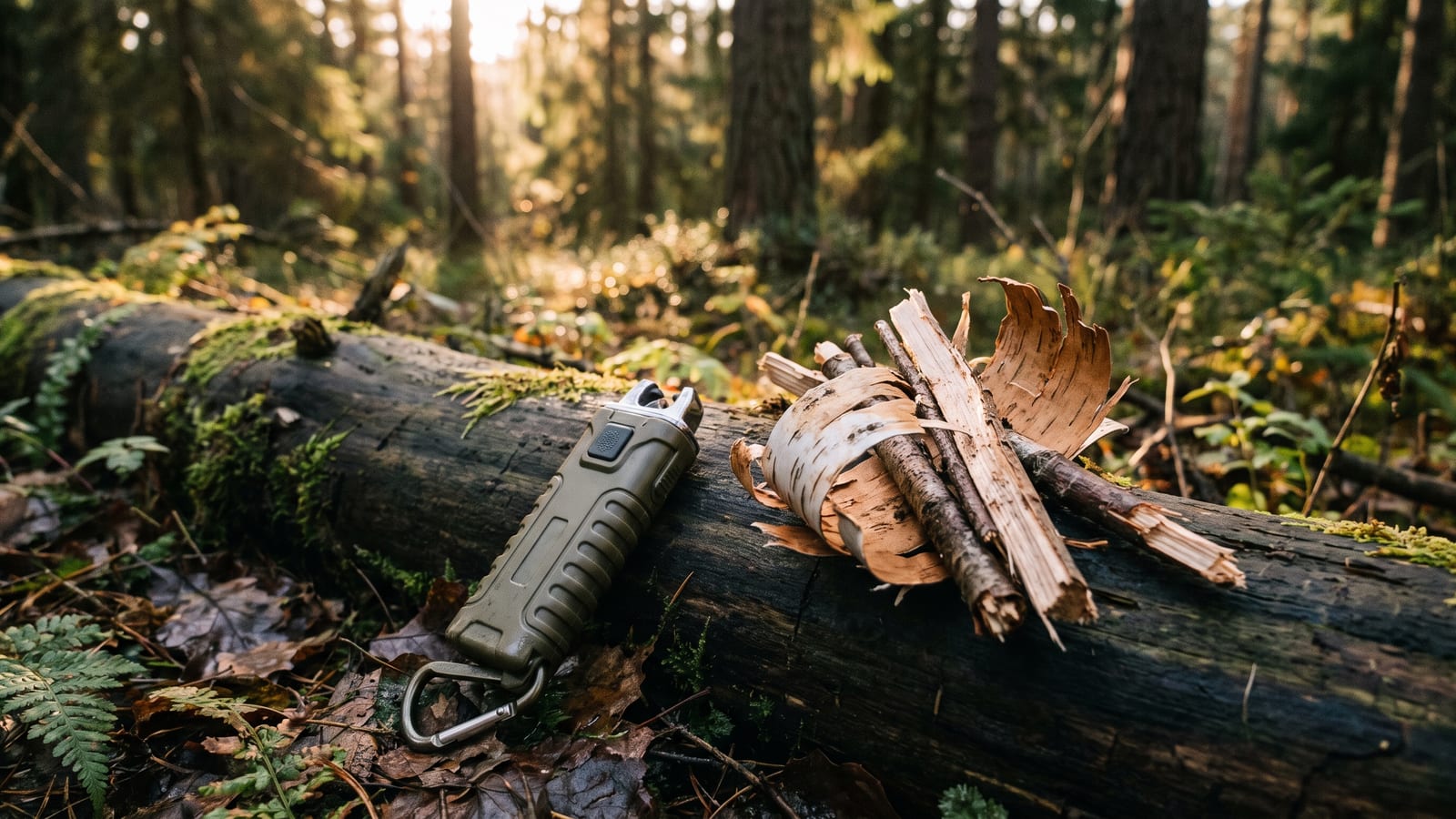
What Is a Waterproof Arc Lighter?
A waterproof arc lighter is a rechargeable electric lighter that creates a plasma arc between two electrodes instead of burning fuel. No butane, no flint, no flame. You press a button, electricity jumps across the gap, and that arc is hot enough to ignite tinder, paper, rope, or cord. Recharge it over USB like your phone.
For outdoor use, this matters in a simple way: you’re not dependent on fuel that runs out, freezes up, or leaks in your pack. The waterproof part means the mechanism is sealed so it survives the conditions that kill traditional lighters.
Why Waterproofing Matters for Outdoor Lighters
Every outdoor person has had a butane lighter fail in the field. Cold reduces vapor pressure and the flame gutters. Tilt it too far and the flame dies. Get it wet and you might as well have a pocket-sized paperweight.
Waterproof arc lighters address this with sealed enclosures rated to IP56 or similar standards. IP56 means dust-tight (the “5”) and protected against water jets (the “6”). In plain English: rain won’t stop it, a creek crossing won’t kill it, and a wet tent pocket won’t matter. What IP56 does NOT mean is submersion. Drop it in a river and hold it there, and water will find a way in. The rating is for water jets and heavy rain, not underwater use.
The comparison to butane is direct. In rain or high humidity, a butane lighter struggles to stay lit. The wind caps on most flame lighters help some, but add water and the situation gets worse fast. An arc lighter doesn’t care about rain because there’s no flame to extinguish. The arc fires every time you press the button, wet or dry.
How Waterproof Arc Lighters Work
The core mechanism is simple. Two electrodes sit close together inside the lighter head. When you activate it, a lithium battery sends a high-voltage charge across the gap, creating a plasma arc that reaches temperatures around 1,800 degrees Fahrenheit. That’s hotter than a butane flame and far more focused.
Most quality waterproof arc lighters use a dual-arc setup, two separate arcs forming an X pattern. More surface area, more reliable ignition, better for catching frayed rope or thin tinder.
The waterproofing comes from the housing. Good units use a metal-ring sealed cover with a locking clasp that keeps the lighter head protected when you’re not using it. The USB charging port gets a rubber plug or sealed cap. When the cover is closed and the clasp is locked, the internals are protected.
Battery life runs around 200 to 300 ignitions per charge, which is a lot of fires. Most units charge fully in about an hour. That’s weeks of camping use on a single charge if you’re not burning through fuel every day.
What to Look for in a Waterproof Arc Lighter
Not all “waterproof arc lighters” are equal. Here’s what actually separates a good one from junk:
IP rating. Look for IP56 at minimum. Some budget units claim “water resistant” without a rating. Skip those.
Dual arc vs. single arc. Dual arc catches faster and works better on natural tinder. Single arc is fine for paper or cotton but less reliable in field conditions. Get dual arc.
Build material. ABS plastic body is fine for the shell. The important part is the closure mechanism. Zinc alloy or stainless steel components on the clasp and seal ring hold up better over time than pure plastic.
USB-C charging port. Micro-USB is obsolete at this point. If the lighter uses micro-USB, you’ll end up carrying a dedicated cable for one device. USB-C means you’re using the same cable as everything else.
Battery capacity. Anything under 400mAh is going to disappoint you on longer trips. 500mAh or better is the target.
Neck flexibility. Some arc lighters have a flexible neck that bends to reach into a fire pit or angled tinder bundle. This is genuinely useful, not just a gimmick.
Accessories included. A lanyard hole matters more than you’d think. Losing a lighter off a carabiner or out of a wet pocket is a real scenario. Bonus points if the unit includes a whistle attachment, which several survival-focused models do.
Top Waterproof Arc Lighters for Outdoor Use
Survival Frog Tough Tesla 2.0. This is the best overall pick for most people. It’s got a solid IP56 rating, dual arc, a carabiner and lanyard included, and a whistle built into the cap. Battery life is strong, the build feels substantial, and it’s designed explicitly for outdoor and survival use. If you want one lighter for camping, hunting, or emergency kits, buy this one.
Black Beard Arc Lighter. Black Beard’s option is built for wet conditions specifically. The sealing on the charging port is notably better than most competitors, and the build is tough without being bulky. It’s a strong choice if you’re regularly in rain-heavy environments like the Pacific Northwest or hunting season in October slop.
Saberlight Sparq. This is the budget pick. It’s around half the price of the Tough Tesla, the IP rating is IP5X (solid on dust, adequate on water), and it uses USB charging. It’s not as rugged and the seal isn’t as confidence-inspiring on the clasp, but it works and the price is honest. Good backup lighter or first arc lighter to try before committing to a premium unit.
Exotac TitanLight. Worth mentioning even though it’s a butane lighter, not arc, because it comes up in every arc lighter comparison. The TitanLight is excellent for cold weather since butane performs poorly in cold but the TitanLight uses a pressure-regulated system. But it still needs fuel, and the waterproofing is mechanical sealing rather than electronics protection. For pure wet weather reliability, the arc options above beat it.
How to Maintain Your Waterproof Arc Lighter
The seal is the most important thing to maintain. After heavy use, check the locking clasp. If it feels loose or doesn’t click firmly, the waterproofing is compromised. Most clasps are easy to adjust or replace.
Keep the electrodes clean. Residue from natural tinder builds up on the arc points over time and reduces efficiency. A cotton swab with a little isopropyl alcohol clears it up. Do this every few weeks if you’re using it regularly.
The charging port cover needs attention too. If the rubber gasket gets dirty or starts to crack, replace it before the next wet trip. A failed port seal lets water into the battery compartment.
Don’t let the battery fully discharge and sit. A lithium battery stored at near-zero charge for weeks degrades faster. Top it off before packing it away for any extended period.
Store it with the cover closed and the clasp locked. Every time. It takes two seconds and it’s the single habit that keeps these lighters functional for years.
When an Arc Lighter Isn’t Enough
Arc lighters have real limitations and pretending otherwise is a disservice.
You can’t reliably light a propane or butane camp stove with an arc lighter. The arc needs direct contact with the fuel to ignite it, and the electrode spacing on most arc lighters doesn’t work well with gas appliances. Some long-neck flexible models can make it work, but it’s inconsistent. Use a piezo igniter for your stove.
Cold kills battery output. At freezing temperatures, lithium batteries lose a significant chunk of their rated capacity. Below 20 degrees Fahrenheit, you might get 60 to 70 percent of your normal ignition count, and the arc strength drops. This is a real problem in winter camping scenarios.
Carry a backup. A BIC lighter and a fire steel weigh almost nothing. Arc lighters are excellent primary igniters but they’re not a complete fire kit. If the battery dies, the seal fails, or you need to light a gas stove, you want a redundant option. This isn’t hedging; it’s how people who actually spend time outdoors think about gear.
Arc lighters also don’t work underwater. IP56 protects against heavy rain and splashing, not submersion. If you capsize and your lighter goes to the bottom of a lake, IP56 won’t save it.
For rain, wind, EDC, and general camping use? A waterproof arc lighter is the best lighter available. Just know what it can’t do.