Outdoor Skills
10 Knots Every Camper Should Know
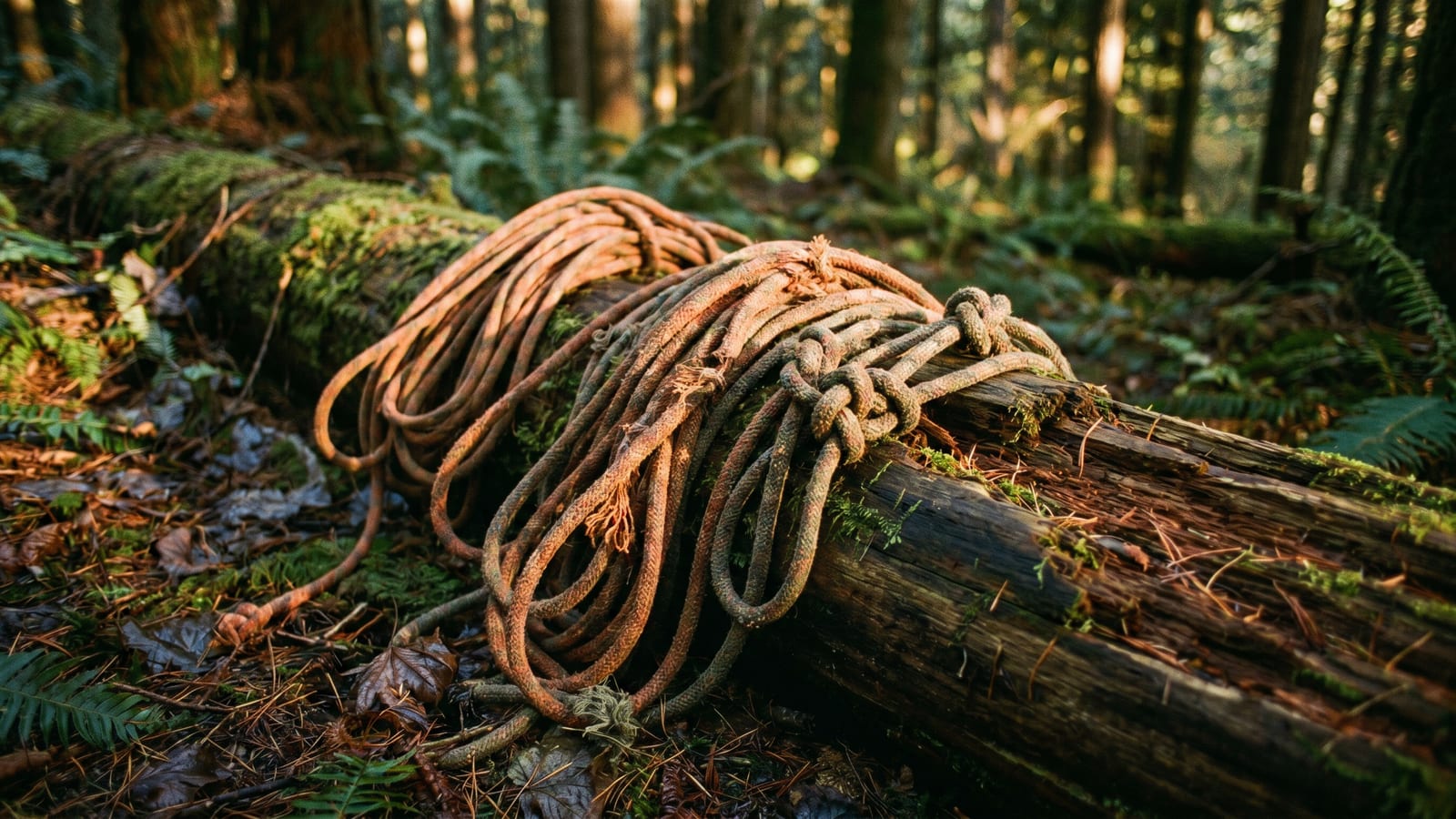
Most camping failures involving rope are not rope failures. They are knot failures. The line was strong enough. The anchor held. But the knot slipped, bound, or unraveled at the worst moment.
You do not need to memorize every knot in a sailing manual. You need to know which ones actually work when your hands are cold, your headlamp is dying, and rain is starting to find its way under your tarp. If you want to know the 10 knots every camper should know, with notes on what each one does and where it falls short, keep reading.
Why Knots Matter More Than Gear
Gear gets attention. People compare tarps, debate sleeping pad R-values, spend hours on sleeping bag temperature ratings. Then they tie their guy lines with whatever knot their dad used and wonder why the tarp collapsed overnight.
A knot changes how a rope performs. The right knot adds tension, creates a secure loop, joins two lines, or anchors to an object. The wrong knot slips under load, binds so tightly it cannot be untied, or weakens the rope enough to matter.
Three things determine a good camping knot: it holds under load, it releases cleanly when you want it to, and you can tie it without thinking. Every knot in this guide meets those criteria.
The Stopper Knots: Overhand and Figure-8
Overhand Knot
The overhand is the simplest knot in common use. Pass the working end of the rope over and through the standing part, then tighten. It keeps rope from sliding through a carabiner, a pulley, or a hole. It anchors a line so the rest of the rope does not pull through.
Its weakness is that it binds hard. Once loaded, an overhand knot can be difficult to untie, especially in stiff rope or cold conditions. Use it where you need a permanent or semi-permanent stop, not where you will need to adjust or release.
Figure-8 Loop
The figure-8 loop creates a fixed loop at the end of a rope. It is stronger than a bowline and less likely to slip, but it also binds more firmly under load. Tie it by forming a loop, passing the working end behind the standing part, and threading it back through the loop to form an 8 shape.
This is the knot of choice for attaching a rope to a harness tie-in point in climbing contexts. For camping, it works well as an anchor loop where you need a fixed, non-adjusting connection that will not come undone.
The Essential Loops: Bowline and Figure-8 on a Bight
Bowline
The bowline is the most useful single knot in outdoor craft. It creates a fixed loop that will not slip or bind under load, and it releases cleanly even after being heavily tensioned. Tie a bowline by forming a small loop in the standing part, passing the working end up through the loop, around behind the standing part, and back down through the loop.
Use it to tie a rope to a tree, create a loop for a carabiner, secure a line where you need a non-slip connection. It is the knot you reach for when you need a loop that stays the same size and releases when you are done.
The bowline can slip if tied incorrectly, specifically if the tails are too short or the loop is not dressed properly. A half-hitch around the loop tail fixes this. Take an extra moment to dress it right.
Figure-8 on a Bight
This is simply a figure-8 knot tied in the middle of a rope rather than at an end, creating two parallel loops. It forms a secure non-slip loop that is easy to check visually, which matters in low-light or stressful situations. Many climbers use it instead of a bowline for tie-in points because it is easier to verify.
For camping, it works well for creating a quick attachment point in the middle of a line, or for forming two loops to clip to separate anchor points.
The Adjusters: Taut-Line Hitch and Clove Hitch
Taut-Line Hitch
The taut-line hitch is an adjustable loop that grips under load but slides when you want it to. It is the knot for tent guy lines, tarp ridgelines, and anywhere you need to re-tension a line as conditions change.
Tie it by forming a loop, wrapping the working end around the standing part twice, then bringing it through the first wrap and finishing with one more turn outside the loop. The knot grips when pulled through the wraps, slides when you push it.
Silnylon tarps stretch when wet. A ridgeline tied with a fixed knot will loosen as the fabric adjusts. A taut-line hitch lets you re-tension in thirty seconds without untying anything. This alone makes it worth knowing cold.
Clove Hitch
The clove hitch is a quick temporary anchor knot. It attaches a rope to a post, carabiner, or ridgeline without requiring an end access. Pass the rope over the object, under, over, and through the top loop. Or wrap twice and pass the working end under both wraps.
It is fast to tie and adjust. Its weakness is that it can slip under variable loads, especially on smooth surfaces like metal stakes or carabiners. Use it for temporary setups, not for anything load-bearing or permanent. If you are holding a tarp corner while you figure out your guy line length, the clove hitch buys you time.
The Grippers: Prusik Knot and Kleimheist Knot
Prusik Knot
A prusik is a friction hitch that grips a rope under tension and slides when you want it to. It attaches to a separate loop of cord that wraps around the main rope. When you push the loop toward the load, it grips. When you pull it away from the load, it slides.
Tie it by wrapping a small cord around the main rope three times, passing the loop ends through themselves, and dressing the wraps so they sit neatly together without crossing.
In camping use, a prusik lets you attach tarp ridge points to a ridgeline so you can slide them into position without untying anything. Set your ridgeline once, then use prusiks to fine-tune your tarp placement. Shift the whole tarp in thirty seconds.
Kleimheist Knot
The Kleimheist is a stronger, more reliable friction hitch than the prusik. It grips more securely and releases more smoothly. Tie it by wrapping the loop around the main rope three times in the same direction, then passing the loop through the wraps and behind the standing part.
If you do a lot of variable friction work, such as setting up complex tarp configurations or using a haul system, the Kleimheist outperforms the prusik. Most climbers have switched to it for this reason.
The Joiners: Sheet Bend and Square Lash
Sheet Bend
The sheet bend joins two ropes of different diameters securely. Pass the working end of the thinner rope through a loop in the thicker rope, wrap it behind the thick rope, and tuck it through the small loop you just formed going the same direction. Pull tight.
If the ropes are very different in diameter, use a double sheet bend: form a bight in the thinner rope, pass it through the loop, wrap both tails behind the thick rope, and bring each one back through one side of the bight. This is far more secure when diameters differ significantly.
Use it to extend a guy line, join sections of cord, or connect a thinner cord to a thicker anchor line.
Square Lash
The square lash ties two poles together at a right angle. Wrap the lashing rope around the top pole, under both poles, then make successive wraps tightening the binding around the intersection. Finish with frapping turns pulled tight between the poles to cinch everything down, then secure the ends.
It is one of the older camping knots and it works. In practice, most campers use it for building camp furniture, fashioning an improvised Crossbuck for a canoe, or lashing poles to create a structure for drying gear. The classic camping lash.
The Anchor: Killick Hitch
The killick hitch anchors a rope to a stick or rock. Wrap the rope once around the object, cross the working end over the standing part to form an X, wrap again to trap the cross, and pull tight. The object acts as the anchor, and the hitch holds it in place against the pull of the line.
In practice, this is what you use when you need to anchor a line and there is no tree, post, or carabiner available. Find a rock that fits in your hand, a stick with some heft, or any object that will not move. A killick hitch makes it a usable anchor point.
For camping with a tarp, this comes up more than you expect. Not every site has convenient anchor points. Knowing how to turn a rock or a branch into a temporary anchor point keeps your options open.
The All-Purpose: Trucker’s Hitch
The trucker’s hitch gives you mechanical advantage. Form a loop in the middle of your rope using a slipped overhand or a figure-8 on a bight, pass the other end around or through your anchor point, thread it through the loop, and pull. The loop acts as a pulley, and you get roughly a 3-to-1 mechanical advantage over the load.
This knot is what you use when you need serious tension: securing a heavy load on a vehicle, tightening a tarp in high wind, or setting up a clothesline under real tension. It takes longer to tie than a taut-line hitch, but it holds with authority.
Our Take
Learn these ten knots and you have covered the range of what camping actually demands: stopping, looping, adjusting, gripping, joining, lashing, anchoring, and tensioning. That is the full vocabulary of rope work.
The real skill is not memorizing the steps. It is building muscle memory so your hands tie these knots without your brain having to work through them. Practice at home, in good light, until the motions are automatic. Then practice them with your eyes closed. That is when you will actually know them.
Start with the bowline and the taut-line hitch. Those two cover more camping situations than anything else. Add the others as you encounter situations that call for them.
Your first trip with working knots will make the difference obvious. A tarp that stays taut, a line that adjusts cleanly, a shelter that holds through a night wind. Those are not luck. That is knowing your knots.