Hunting · Gear
Best Bait for Largemouth Bass – What Actually Catches Fish
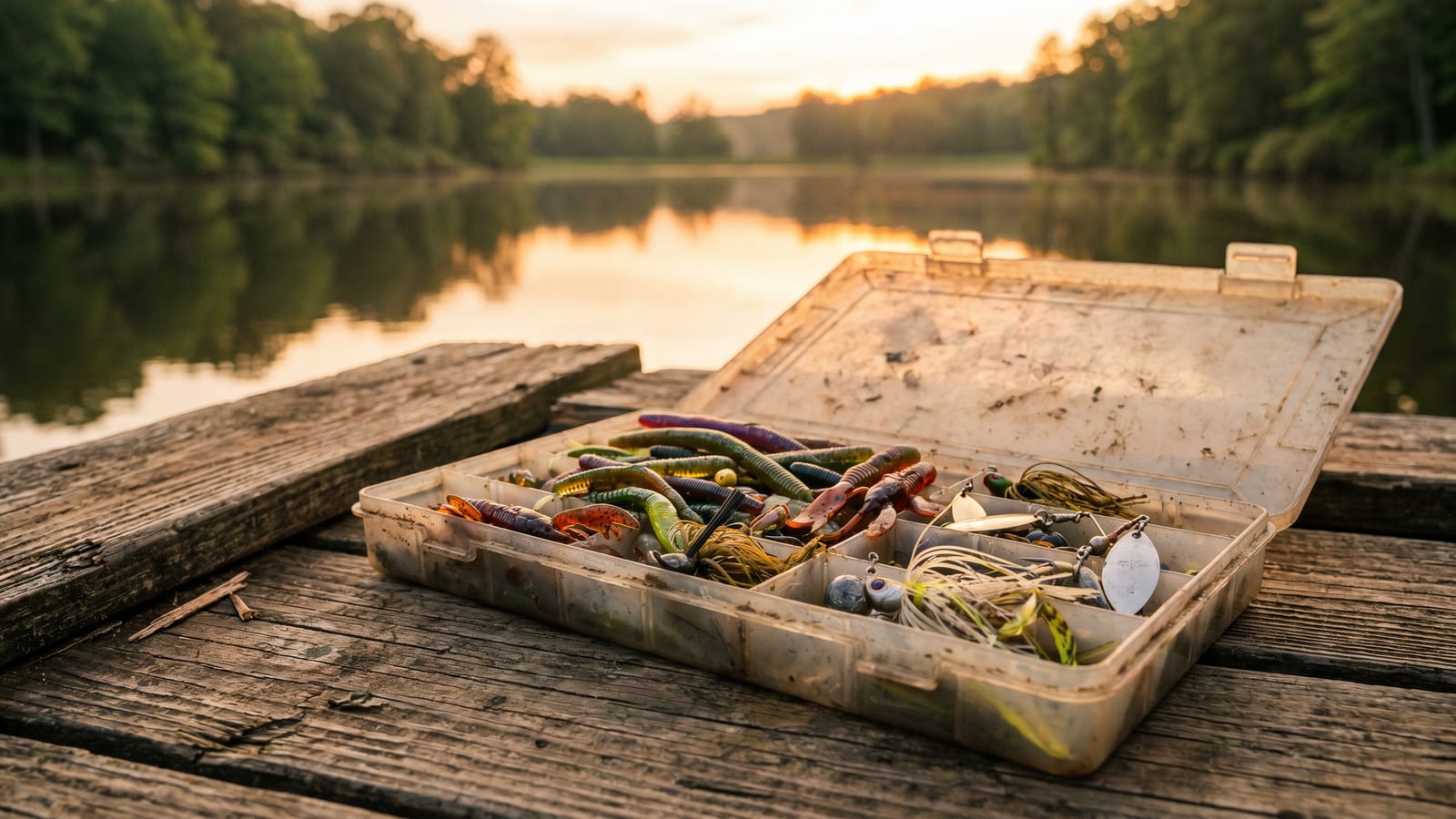
Largemouth bass are predators. They eat bluegill, crawfish, frogs, insects, and smaller fish. They are opportunistic and aggressive when conditions are right. The problem is not finding something a bass will eat. The problem is understanding when a bass wants a live baitfish drifting naturally versus a fast-moving jerkbait triggering a reflexive strike.
This guide covers the bait categories that actually produce and gives you a framework for matching your bait to conditions.
Live Bait - The Reliable Choice
Live bait catches bass because it behaves the right way without requiring perfect technique from the angler. A live bluegill fished under a bobber near submerged cover is one of the most reliable patterns for big largemouth.
Bluegill and sunfish are the top live baits for trophy-sized largemouth. Bass that have grown large did it by eating forage fish, and a 3- to 5-inch bluegill looks exactly like what a 5-pound bass wants for dinner. Thread the hook through the back behind the dorsal fin and let it swim freely. Keep the bluegill alive in a bucket with a battery-powered aerator. Do not expect them to last more than a few hours in warm water without oxygen.
Crawfish are underrated and productive. Bass love them. Rig a live crawfish on a light wire hook with the point exposed and let it move along the bottom near rocks, logs, or creek channel bends. The crawfish will try to escape and that movement triggers bites. Red crawfish patterns in soft plastics work the same water and are easier to keep.
Frogs and mice are not everyday baits but they produce big bass when bass are feeding on the surface. A live frog worked over weed mats and lily pads in early summer will draw violent topwater strikes. Hook it through both hind legs on a weedless rig so it slides through cover without snagging.
Nightcrawlers and leeches catch bass in cooler water when bass are less active. A slip bobber with a live nightcrawler under a weedless hook works well in spring and fall. Bass are not in a feeding mood in cold water but they will still take a slow, easy meal.
Live bait wins when bass are neutral or inactive. In cold front conditions, after a storm, or in stained water, live bait outperforms artificials because the movement is natural and requires no confidence from the angler. The downside is keeping it alive and getting it to the fish before it dies.
Plastic Worms - The Bass Fishing Standard
The plastic worm is the single most versatile artificial bait for largemouth bass and it is not close. A 4- to 7-inch worm rigged Texas-style (weedless, with the hook buried inside the plastic) will catch bass in virtually any cover at any depth.
The Texas rig is simple: thread the bullet weight onto your line, tie the hook, push the hook point into the plastic body so it is hidden, and drag it slowly across the bottom. Bass pick it up off the bottom and you set the hook when you feel the weight. This covers water others will not work.
The wacky rig is another high-producer. Slide a small O-ring onto the middle of a straight worm, stick the hook through both sides of the ring so the worm dangles and trembles. The wacky rig shines in open water near submerged grass or dock pilings. It requires a finesse retrieve but it catches bass that ignore faster-moving baits.
Stick bait rigs like the Senko work on a weightless Texas rig or a wacky ring. The idea is the same: let the bait fall on a slack line so it flutters down naturally. Bass often hit it on the fall. You do not retrieve this bait as much as you cast it out and let it sit.
Colors matter less than most anglers think in clear water, but in stained or muddy water use darker colors - purple, black, or dark green - that create silhouette contrast. In clear water, natural colors like green pumpkin, junebug, and watermelon work better.
Crankbaits and Jerkbaits - Covering Water Fast
When bass are active and feeding, you want to get a bait in front of as many fish as possible. Crankbaits and jerkbaits let you cover water quickly and trigger reaction strikes from bass that would not bother with a slow-moving plastic.
Squarebill crankbaits are the best search lure for early season and for fishing new water. They dive 3 to 6 feet, deflect off cover, and run without snagging on most submerged structure. The constant ticking and vibration makes them easy to feel even without watching the line. In spring, when bass move shallow to spawn, a squarebill worked along grass lines and secondary points produces consistently.
Deep-diving crankbaits handle deeper water. A lure that runs 10 to 20 feet gets bass that are holding on channel bends, submerged creek beds, or the deep side of a ledge. Retrieve it at a steady speed and let the diving lip do the work. You do not need to add much action.
Jerkbaits are suspending lures that dive to a fixed depth and hang there when you stop the retrieve. The pause is the key. You jerk the rod tip to move the bait, then let it sit still for a second or two. The pause is when bass most often hit. This lure is deadly in cold water - early spring before the spawn, late fall when water is cooling. Bass are less inclined to chase fast food in cooler temperatures but they will reach out and nail a jerkbait that sits in their face.
Chrome and clown colors are reliable jerkbait choices. In stained water, chartreuse and white help the bass see the lure. Match the hatch in clear water - colors that look like the local baitfish.
Spinnerbaits and Jigs - Versatile and All-Season
Spinnerbaits are a bass angler’s most versatile lure and they work in conditions where other lures struggle. Heavy cover, dirty water, low light, and early morning hours are where spinnerbaits dominate.
The Colorado blade provides maximum thump and vibration. It works in dirty water or over deep grass where bass are tracking by feel. The Willow leaf blade moves faster and thinner - better in clear water or when bass are keyed on baitfish.
Spinnerbait retrieve is simple: cast it out and reel it back at a steady pace, keeping the blade turning. Add a bucktail trailer for more bulk and a better profile. Work spinnerbaits through weed mats, over submerged brush, and along dock lines.
Jigs are the bait for serious cold-water fishing and for pressured bass that have seen too many lures. A football jig with a chunk trailer is the standard deep-water jig. Drag it slowly across rocky bottoms and gravel. A flipping jig with a heavy weed guard gets into dense cover where big bass hide during the day. The pitch and flip technique lets you place the bait exactly where you want it with minimal noise.
Most anglers overwork jigs. A slow drag along the bottom with occasional small hops gets more bites than constant popping. Bass in heavy cover are ambush predators. The jig should look like it is moving naturally, not fleeing.
Matching Bait to Conditions
Stop guessing. Use the conditions in front of you to pick the right bait.
Water temperature drives everything. Below 55 degrees, bass are cold-blooded and slow. Use slow-moving live bait or finesse plastics like the wacky rig and drop-shot. Above 65 degrees, bass are aggressive and chasing. Crankbaits, spinnerbaits, and fast retrieves cover water and trigger strikes.
Water clarity matters. In murky or stained water, use larger profiles and louder action. Spinnerbaits with large blades, dark plastic worms, and bright crankbait colors cut through the visual noise. In clear water, use smaller, more natural presentations - finesse plastics, jerkbaits, and slower retrieves.
Time of day changes your approach. Early morning and late evening are topwater time. Poppers, walking baits, and frogs over weed cover catch bass that are feeding on the surface in low light. During the middle of the day, bass move deeper and slow down. Drop-shot rigs, deep crankbaits, and slow-dragged plastics pick up bass that are holding on structure.
Season shapes your priorities. Spring is the spawn. Bass move shallow to nest. Soft plastics and jigs near bedding areas work well. Summer means deep fish and early/late topwater. Fall is the best big-bass season - bass are feeding heavily to pack on weight before winter. Crankbaits and spinnerbaits covering water catch post-spawn and pre-winter bass in their shallow transition zones.
Our Take
There is no single best bait for largemouth bass. There is the right bait for your conditions and the wrong one.
If you are new to bass fishing and want one lure to start with: get a 7-inch plastic worm in green pumpkin or junebug on a Texas rig. It catches bass in more situations than any other single lure and teaches you how to feel bites and set hooks.
If you fish in stained water, early morning, or heavy cover: a 1/2-ounce spinnerbait with a Colorado blade is the most reliable search lure you can throw.
If you want to catch big bass in cool water: learn to work a ** suspending jerkbait**. The pause-and-retrieve cadence consistently produces bigger fish than faster-moving lures.
The wrong approach is showing up with one bait type and throwing it all day regardless of what the water is telling you. Read the conditions. Switch your approach. Bass fishing is not complicated but it requires paying attention.