Outdoor Skills
Freshwater Fishing: A Practical Guide for Beginners
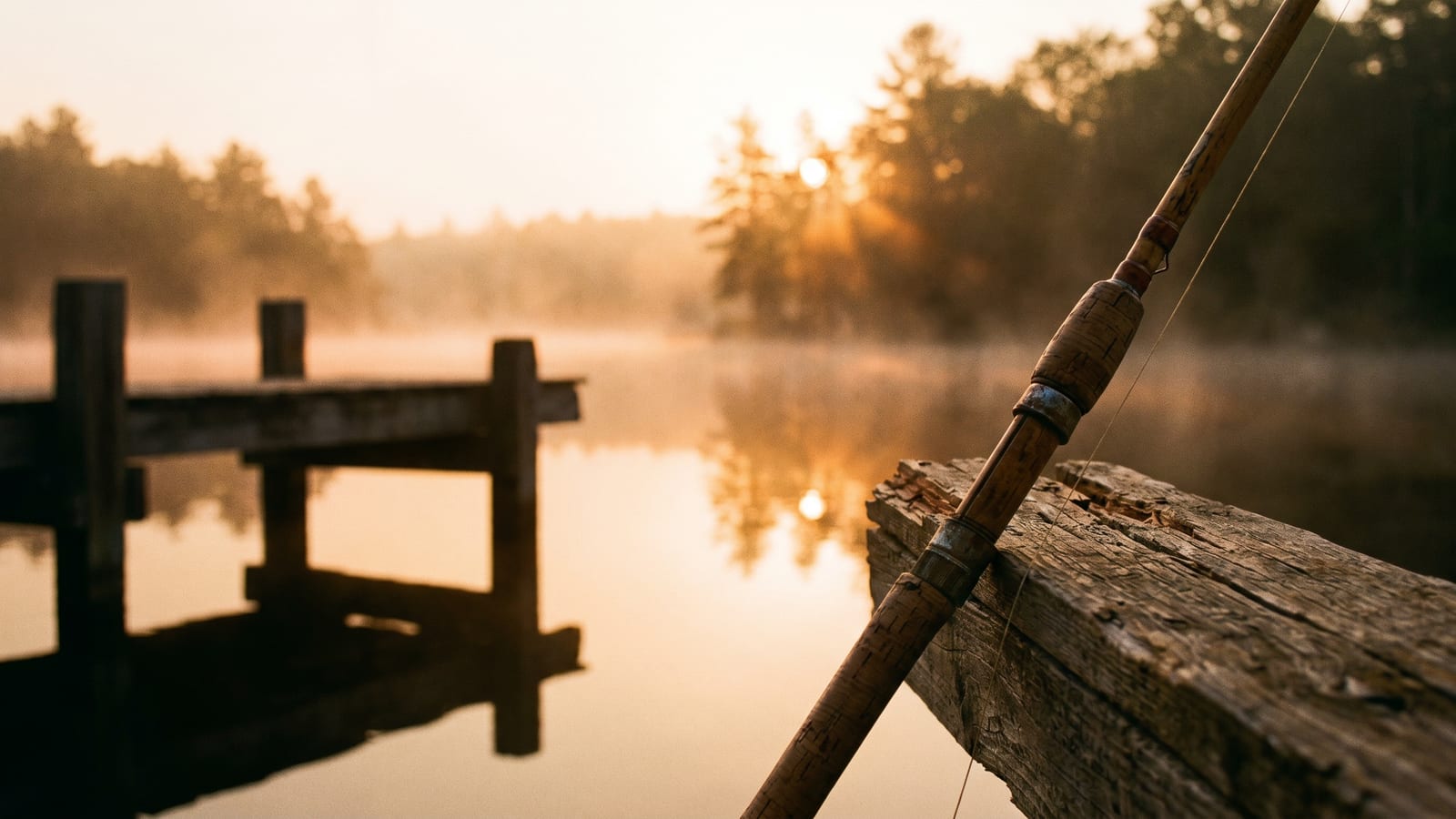
Freshwater fishing is simple to start and difficult to master. That gap is the whole point. You can be catching fish within your first hour on the water, but reading a lake, understanding why the fish are where they are, and adapting your approach to conditions takes years to develop. This guide covers the basics so you can get on the water and start learning. The rest is time on the water.
Why Fish Behave the Way They Do
Fish are cold-blooded, and that single fact explains more about freshwater fishing than any technique you will ever learn. Their metabolism tracks water temperature directly. Cold water slows them down. Warm water revs them up, until it gets too warm, then they shut down and go deep. Everything from where they hold to how aggressively they feed comes back to temperature and cover. Learn to think about water temperature first, and every other piece of knowledge you pick up will slot into place.
The Minimum Gear You Actually Need
Do not buy everything at once. Your tackle box grows over years of fishing, not one trip to the sporting goods store.
Start with a quality spinning rod and reel combo in a 6-7 foot medium action. This covers most freshwater situations you will encounter as a beginner: lakes, ponds, slow rivers. A spinning reel is the easiest to learn because it is forgiving of bad technique. You will backlash a baitcaster. Save that for later.
Line weight depends on what you are targeting. Six to eight pound test monofilament covers the majority of freshwater species: bass, trout, panfish, walleye. Use lighter line on clear, pressured water where fish are line-shy. Use heavier line around heavy cover where you need to pull fish out fast.
Your basic terminal tackle: split shot sinkers, a small pack of hooks (size 6 to 2 work for most situations), bobbers, and needle-nose pliers. The pliers are not optional. You will use them every trip to remove hooks and crimp split shot.
The rod is the most important piece of gear. A cheap rod feels dead in your hand and makes learning to cast harder than it needs to be. Spend a little more here and you will notice the difference immediately.
Live Bait vs. Artificial Lures
Live bait works when fish are finicky or when you want action without worrying about technique. Worms are the most reliable all-around bait. They catch almost every freshwater species and require no special presentation. Minnows target walleye, bass, and trout. Crickets and leeches work well for panfish and trout in specific situations.
Keep your live bait cool and in a ventilated container. Hot bait dies fast and catches nothing.
The tradeoff is real: bait is more forgiving but teaches you less about fish behavior. When you throw a worm under a bobber and a bass takes it, you did not do much to earn that bite.
Artificial lures strip that away. You have to move the lure in a way that triggers a strike. That movement, the retrieve, is where the learning happens. A worm on a hook does not care if you reel it in fast or slow. A jerkbait responds completely differently depending on your cadence.
Use bait when you are starting out and just want to catch fish. Switch to lures once you have the basics down and want to understand why the fish are biting or not.
Reading the Water, or Where Fish Actually Hold
Most beginners pick a spot, cast repeatedly, and wonder why nothing is happening. The problem is almost always location. Fish are not randomly distributed. They hold in specific types of water because those spots offer food, protection, or both.
Current breaks are fish highways. Where water flow changes direction or speed, behind a rock, along a fallen log, or at the tip of a point, baitfish get funneled and predator fish wait. Look for visible turbulence or a change in water color at a seam.
Depth changes matter. A sudden drop from shallow to deep water, an underwater ridge, a channel edge: these are where fish stage to feed as they move between depths. On a lake, find the drop-off and you have found the fish.
Cover objects create ambush points. Submerged trees, weed bed edges, dock pilings, rock piles. Fish do not want to spend energy fighting current when they can sit next to something that offers food and shelter.
Transitions between water types are particularly productive. Where a creek channel runs through a flat, where a rocky bottom meets a sandy bottom, where the weeds start: these boundaries concentrate baitfish and the predators that eat them.
From the bank, look for water color changes (darker water often means deeper), visible cover (standing timber, weed mats), and incoming water (creek mouths, drainage ditches). Do not stare at the water looking for fish. Look for the features that tell you where fish should be.
Basic Techniques That Produce Fish
Casting accuracy matters more than distance, especially from shore. Hit the same spot three times in a row before moving. Most fish are caught within a few minutes of your cast. If you have had the lure in the water for ten minutes with no action, move.
Work a lure with intention. A steady retrieve is fine, but varying your speed triggers more strikes. Try a stop-and-go: reel a few turns, pause for two to three seconds, repeat. Try a twitch-and-pause: sharp twitches of the rod tip followed by pauses. Different situations call for different actions. Learn to experiment.
With live bait, use the minimum weight needed to get your bait where you want it. Heavy split shot means your bait drifts unnaturally. A small bobber keeps your hookup off the bottom and lets you detect bites more clearly.
The most common beginner mistake is staying in a bad spot too long. If the water does not have the features described above, or if you have fished a good spot for twenty minutes with no touches, move. Fishing is a moving game more than a waiting game.
Seasonal Patterns, or Fish by Water Temperature
Fish move with water temperature. Understanding this pattern lets you reason about where the fish should be rather than just guessing.
Spring cold water: Fish move shallow to spawn or feed in warming shallows. This is one of the best times to catch big fish because they are aggressive and in shallow water. Focus on pockets of warm water and incoming creek channels.
Late spring and early summer warming: Fish move deeper during the heat of the day and shallower at dawn and dusk. Fish the shallows early, then follow them out to deeper water as the sun rises. Focus on depth changes adjacent to shallow flats.
Midsummer hot water: Fish go deep or find shaded, cool areas like wood cover, deep weed lines, and spring-fed pockets. Early morning and evening fishing improves dramatically. Midday fishing gets tough.
Fall cooling: Fish move back shallow to feed aggressively before winter. This is often the best season for big fish. They are hungry, active, and back in shallow water. One of the most overlooked fishing periods of the year.
Ice fishing is a separate discipline with its own gear and techniques, but the same temperature principle applies. Fish are most active under the ice in the shallows during early and late ice. Midwinter, they go deep.
Catch and Release: How to Do It Right
Most fish you catch should go back. Slot limits and conservation-minded fishing keep populations healthy so there are fish for the next generation.
When you do release a fish, wet your hands before handling it. Dry hands strip the protective slime coat and can damage the fish’s skin. Support the body horizontally. A fish held vertically by the jaw can suffer internal damage. Keep the fish in the water as much as possible. A fish out of water is a fish in trouble.
Barbless hooks or crimped barbs make release faster and less damaging. If a fish is deeply hooked, do not try to pull the hook out. Clip the line as close to the eye as you can. The hook will corrode out and the fish has a better chance than if you tear out the throat trying to retrieve it.
Know when to keep a fish: if it is within a slot limit, if you have not hit your personal limit, or if you plan to eat it. Do not feel guilty about keeping a legal fish. Do not feel obligated to keep one either.
Fishing Regulations You Cannot Ignore
Every US state requires a fishing license. Most countries have similar requirements. Buy your license before you go. Check daily and seasonal limits for the species you are targeting. These vary by state and by year.
Slot limits require you to release fish that are either too small or too large, keeping only those within a specific size range. This protects breeding stock and juvenile fish. Closed seasons during spawning periods exist for the same reason.
Some waters are catch-and-release only. Others have special gear restrictions. These rules are posted at boat launches and fishing access points, and available through your state’s fish and wildlife website.
Not knowing the regulations is not a defense. Carry your license and know the rules for the specific water you are fishing.
Our Take: Start Simple, Learn Fast
The fastest path to competent freshwater fishing: a spinning combo, worms, a small split shot, and a bobber. Fish near visible cover in a pond or lake. Spend time learning to read water instead of perfecting a technique. Move when fish are not there.
The skill that separates anglers is finding fish, not manipulating lures. Every cast you make from a bad spot is wasted time. Study the water, identify the features, and put your bait where the fish should be.
Buy one good rod. Learn to cast cleanly and accurately. Read the water every time you fish a new spot. Then go and catch some fish.