Outdoor Skills
Essential Outdoor Skills – What You Need to Know Before Going Out
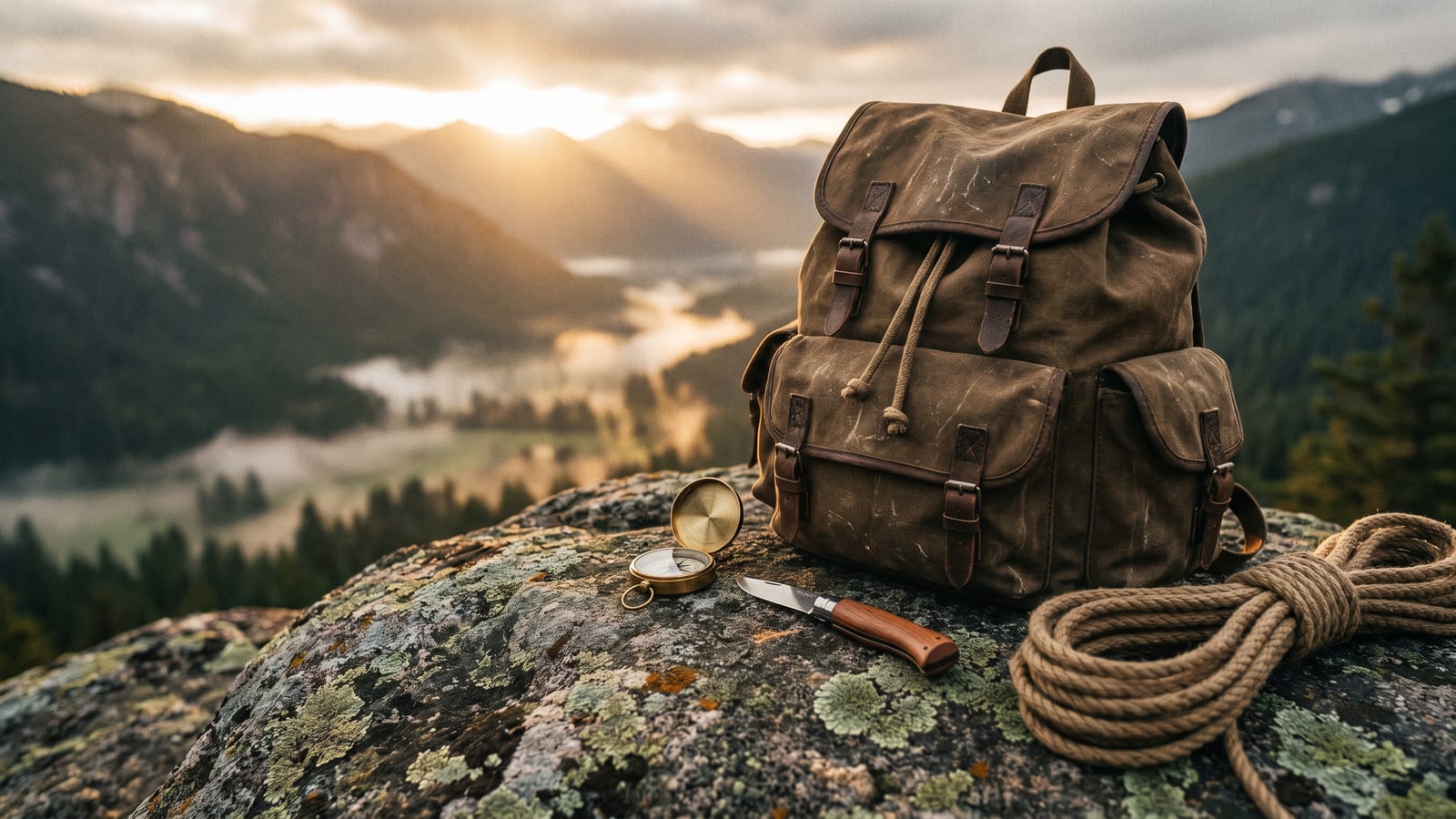
People spend hundreds of dollars on gear before they spend an afternoon practicing essential outdoor skills that keep them alive when something goes wrong. The $400 tent does not help if you cannot start a fire in wet conditions, navigate back to the trailhead, or recognize the early signs of hypothermia.
Gear is a multiplier. Skills are the base. These skills matter across every outdoor activity, from a weekend car-camping trip to a multi-day backcountry excursion. You do not need to master all of them before your first trip. But you need to know which ones to prioritize and why.
Why These Skills Matter More Than Gear
Every year, Search and Rescue operations pull the same statistics: most rescues involve people experienced enough to be out there but underprepared for the specific situation. A thunderstorm that came in faster than expected. A stream crossing that turned out to be waist-deep. A twist half a mile from camp that made the hike out impossible.
These are failures of skill and judgment.
The good news is that outdoor skills are learnable by anyone. They do not require special talent. They require practice and a willingness to be uncomfortable while you figure things out. The baseline for safe outdoor recreation is lower than most people assume when you have the right skills.
Navigation – Learn This Before Anything Else
If you learn only one skill before a trip, make it navigation. Getting lost is the event that triggers everything else going wrong. Hypothermia, injury, dehydration, exposure. They all follow from being somewhere you did not intend to be, longer than you planned.
Using a map and compass does not need to be complicated. The basics take an afternoon to learn and a season to get comfortable with.
Orient your map to the terrain using your compass. Take a bearing to your destination. Follow that bearing while checking your map. Triangulate when the terrain is ambiguous. These three things will get you un-lost in most situations.
GPS is a useful supplement but a poor replacement. Batteries die. Screens crack. Phones lose signal in the terrain that matters most. Carry a map and compass and know how to use them. Your GPS is the tool you reach for when conditions are easy. The map and compass get you out when everything is hard.
Practice in your local park before you need this skill in the backcountry. Take a bearing to a visible landmark and walk to it. Triangulate your position between three known points.
Fire Starting – The Skill That Covers Multiple Failures
Fire solves problems. Wet clothes, cold nights, warmth when things feel dire, boiling water for purification. A fire is one of the most useful things you can have outdoors.
The skill is not just striking a ferro rod. It is understanding the tinder hierarchy and building structures that work in wind and rain.
Dry tinder catches a spark. Damp tinder requires processing: splitting wood to expose dry interior, stacking so heat builds. Tinder you process from dead standing wood is more reliable than what you find on the ground in wet conditions.
Fire structures matter. A lean-to works with solid fuel and decent conditions. A platform fire distributes heat for cooking. A log cabin structure will ignite in conditions that extinguish a flat spark fire. Practice all three.
The real test of fire skill is getting a fire going with wet tinder, wind, and cold fingers. Practice in adverse conditions so you know your limits before you are counting on the fire to keep you alive.
Carry two ignition methods: a ferro rod and a lighter, stored in separate locations so losing one does not cost you both.
Water Purification – Do Not Drink Straight from Streams
Every freshwater stream should be considered contaminated until purified. Giardia is present in most waterways, carried by wildlife upstream. Beaver fever, as it is also called, will ruin your trip and potentially require medical treatment. The diarrhea and cramping are not worth the convenience of skipping purification.
Boiling is the most reliable method. Bring water to a rolling boil for at least one minute (three minutes above 6,500 feet). That is it. No special equipment needed.
Chemical treatment with iodine tablets or bleach works but has limitations. Cold water dissolves chemicals slowly. Some organisms are resistant to iodine. Bleach loses potency over time. Use boiling or filtration as your primary method and chemical treatment as a backup for filtered water that might need an extra step.
Pump and squeeze filters remove pathogens mechanically. They are fast and effective when maintained properly. Backflushing and keeping filter elements from freezing are the two maintenance tasks most beginners skip until it is too late. Read the manufacturer instructions and follow them.
UV sterilization (Steripen-style devices) works quickly but requires clear water and charged batteries. Cloudy water scatters the UV light and reduces effectiveness. Strain cloudy water through a bandana or shirt before treating it.
The practical minimum: carry two purification methods. If one fails or gets lost, you have a backup.
Shelter and Warmth – Know How to Regulate Body Temperature
Hypothermia can set in at temperatures well above freezing if you are wet and wind-battered. Heat exhaustion is a real risk in summer when hikers underestimate water loss. Managing body temperature is a skill that applies across all seasons.
Layering is the framework. A base layer moves moisture away from your skin. An insulating layer traps warm air. A shell layer blocks wind and rain. Venting by opening zippers does the same job as adding a layer. It is about controlling heat accumulation before you sweat through everything.
The counterintuitive part for beginners: staying warm is usually about staying dry and out of the wind more than adding more insulation. A shelter that blocks the wind and keeps your insulation dry will keep you warmer than a thicker sleeping bag in a drafty tent.
Emergency shelter construction matters when your planned shelter is unavailable or inadequate. A debris pile shelter, properly built, can add 10 to 15 degrees of warmth over just a sleeping bag on the ground. Build it before you need it, not after you are already cold.
Know the signs of hypothermia: uncontrolled shivering, confusion, slurred speech, loss of coordination. If you see these in yourself or a partner, act immediately. Stop, get dry, add insulation, get warm.
First Aid Basics – What to Handle Before It Becomes an Emergency
Most outdoor medical situations are not dramatic. They are cuts, blisters that turn into wounds, twisted ankles that swell until you cannot walk, dehydration that becomes a headache. The ones that matter start small and get worse because people wait too long to treat them.
Carry a basic first aid kit and know how to use its contents. Cleaning and covering wounds is the most important skill. Irrigation with clean water, antibiotic ointment, and a clean bandage prevents most wound infections. The biggest mistake beginners make is not cleaning a wound thoroughly enough before bandaging it.
Blister management: stop pain early. Apply moleskin or a blister patch before the blister forms if you feel hot spots. Once a blister is open, clean it, apply antibiotic ointment, and protect it with a cushioned bandage that does not put pressure on the wound.
Know the signs: heat exhaustion (heavy sweating, nausea, weakness), heat stroke (no sweating, confusion, rapid pulse), hypothermia (shivering that stops as it worsens), altitude sickness (headache, nausea at elevation). When in doubt, descend or shelter and hydrate. Waiting to see if it gets worse is not a strategy in the backcountry.
Food Storage and Bear Safety – The Skill That Prevents Bad Outcomes
Bears that become habituated to human food are dangerous and often have to be killed by wildlife managers. Proper food storage is not just about protecting your food. It is about keeping both you and the bear alive.
Bear canisters are required in many parks and forests. They are the most reliable method: a hard plastic container a bear cannot open. Carry the appropriate canister for the region you are in and use it.
Bear hangs work when done correctly, which is harder than most people realize. The standard rule: 10 feet off the ground, 6 feet from the trunk, 4 feet from the branch. In practice, finding a branch that meets those specs while tired at dusk is not easy. Practice at home.
Ursacks and similar soft-sided containers are a middle ground. They are not as impervious as canisters but are lighter and easier to hang. Check the specific bear-resistant rating for your region: some areas require canister certification.
Carry bear spray and know how to use it. It is not a deterrent you wave around. It is a ranged spray for close range when a bear is charging. Read the instructions before you need them.
Never store food in your tent. Not snacks, not gum, not anything with a scent. The tent is for sleeping. Food stays outside, properly stored.
Knot Tying – Three Knots Cover Most Situations
You do not need to know thirty knots. You need to know three knots well enough to tie them in the dark, with cold hands, under stress.
The overhand knot is your stopper. It keeps rope from sliding through a pulley or a hole. Simple, and it serves as the foundation.
The taut-line hitch adjusts tension on a line. It tensions a tarp, secures a tent rain fly, or adjusts a guy line. Learning to tie it so it holds under load but releases when you want it to takes a few practice sessions.
The bowline creates a fixed loop that will not slip or bind. It secures a line to a tree, creates a loop in a rope, or handles any situation where you need a loop that stays the same size. It is one of the most useful knots in outdoor craft.
Practice these three until muscle memory takes over. Then practice them again.
Our Take – Start Here, Build from There
If you are preparing for your first outdoor trip, prioritize two skills above all others: navigation and fire. These keep you from getting into a situation that requires the rest of the list. Learn to read a map, take a bearing, and get yourself back to the trailhead. Learn to build a fire that survives wind and damp tinder.
Everything else stacks on top of those two. Water purification prevents illness. Shelter skills prevent hypothermia. First aid prevents small problems from becoming emergencies. Knots make your gear work properly.
A realistic learning path: beginner means knowing the basics of all these skills before a trip. Intermediate means practicing until the basics feel routine. Advanced means improvising when your planned approach fails.
Start now. Your local park is enough.