Gear
Diesel Jump Starters vs Jumper Cables – Which Should You Carry
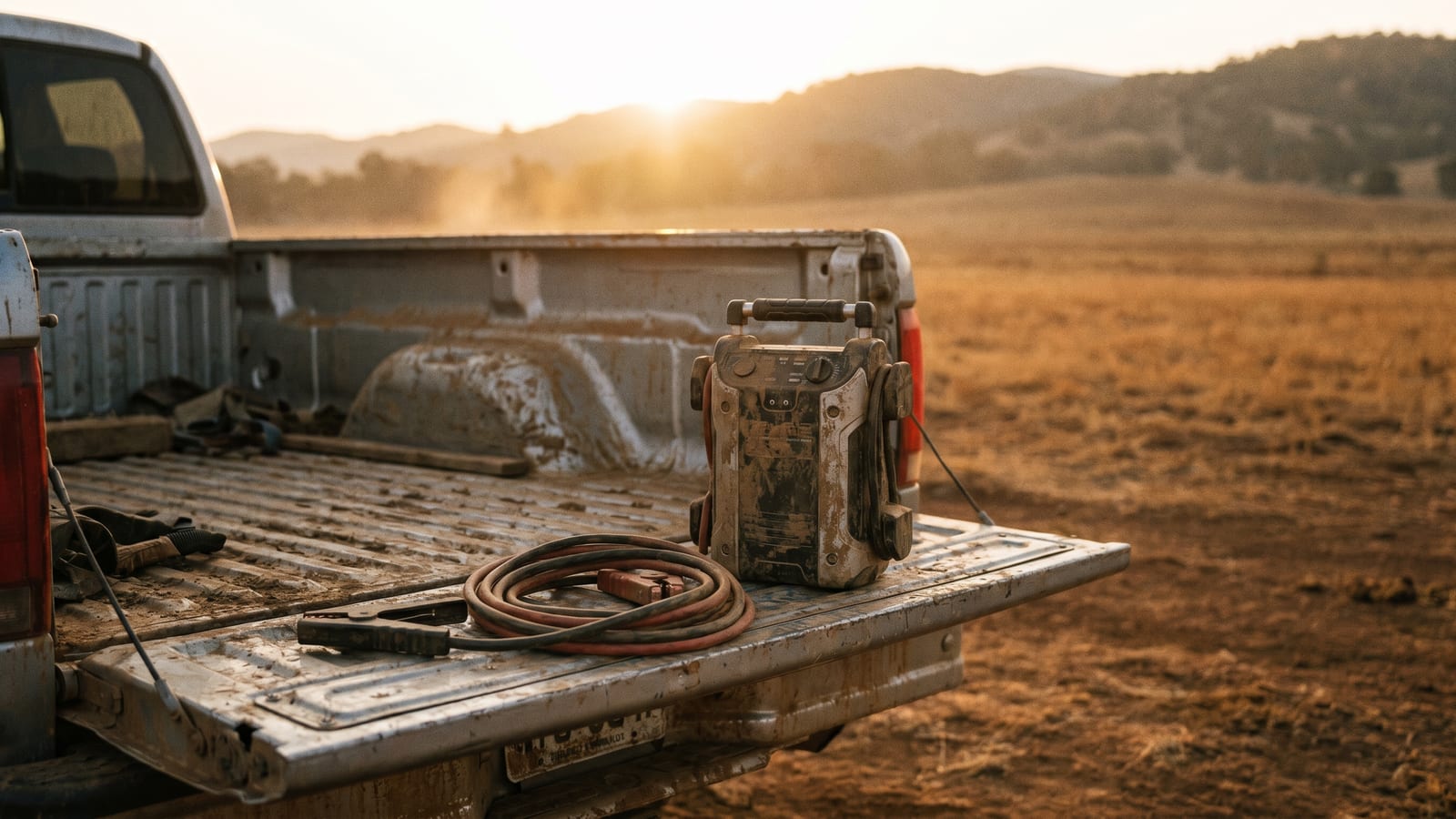
Diesel engines do not forgive neglect. Leave your glow plugs running, skip an oil change in cold weather, or just have the misfortune of a weak battery after three days camping and you are looking at a no-start situation in the middle of nowhere. When that happens, you need a plan.
Two options exist: jump starter packs or traditional jumper cables. Both work, but they are not interchangeable. The right choice depends on where you are, what you are driving, and how much gear you want to carry.
The Core Difference
Jumper cables are passive. Two cables, battery clamps, nothing electronic. You need a second vehicle with a good battery to make them work.
Jump starter packs are active. They carry their own charged battery inside a pack. You connect the clamps to your dead battery and they do the job alone, no second vehicle required.
That single difference drives everything else.
What Diesel Engines Actually Demand
Diesel batteries work harder than gas ones. Cold cranking amps (CCA) ratings run higher because diesel compression ratios are brutal. A gas engine might need 400 to 500 CCA to turn over in freezing temperatures. A diesel pickup often wants 700 to 900 CCA or more.
When your battery dies in your driveway, a decent gas sedan can bump-start you with cables. When your battery dies at a trailhead in late October, you need serious power and a second vehicle may not exist for miles.
This is why the location matters more than the comparison.
Common Mistakes That Leave You Still Stuck
Using the wrong gear is how people end up spending a night waiting for a tow. The most frequent failures:
Buying cables that are too thin. A 10-gauge set from a gas station will heat up and deliver almost nothing to a cold diesel battery. Voltage drop kills you before the cranking amps even matter. If the cables feel thin and light, they are wrong. Look for 4-gauge minimum, 2-gauge if you want real margin.
Letting the jump starter sit uncharged. Lithium packs self-discharge at about 5 percent per month when idle. After six months in your truck under a seat, a pack you thought was full might be at 60 percent. Check and charge before long trips.
Connecting backwards. Positive to positive, negative to negative. This sounds obvious but people in the dark, rain, or stress get it wrong. Color coding helps but inspect your clamps before you connect.
Using a pack rated for gas engines on a diesel. Read the specs, not the marketing. “Starts any car” on the box means nothing. Look for the diesel-compatible CCA rating and peak amps.
Not running the donor engine while boosting. If you are using cables, the donor vehicle engine should be running at moderate RPM while you attempt to start. Some alternators cannot handle the load of a completely dead battery at idle and will not deliver enough charge current.
Jumper Cables - When They Actually Work
Jumper cables have two things going for them: low cost and no maintenance. A solid set of 2-gauge cables with 400 amp capacity runs $40 to $80 and lasts for decades if you keep the clamps clean.
For in-town or near-paved-road situations, cables are usually the answer. If you broke down 10 miles from a gas station on a Forest Service road, you can flag someone down and be running in under 10 minutes.
The problem is gauge and length. Thin cables (10 or 8 gauge) lose voltage over distance and cannot deliver enough current to start a cold diesel. You need 2-gauge or 4-gauge cables minimum, and at least 20 feet long if you are dealing with batteries in awkward positions under a hood or under a truck bed.
Practical note: the reach matters more than people think. Most people buy 16-foot cables and then cannot position the donor vehicle close enough to reach. Buy longer than you think you need.
When cables are the right choice:
- You drive a main road and can get cell signal
- Someone else is likely to come by
- Your vehicle is not buried or blocked
- You already own a set and they are in your vehicle
Jump Starter Packs - What You Actually Need
Not all jump starter packs are built for diesel. A pocket-sized unit that claims 1,000 peak amps will start a stalled Lawn Deth riding mower. It will not start a 6.7L Powerstroke.
For diesel engines you want:
- At least 1,500 peak amps, 2,000+ for larger engines
- At least 400 cold cranking amps (CCA)
- 12-volt output
- A battery type that holds charge for months, not days
Lithium ion packs have changed this market. A compact unit that fits under a truck seat can deliver 2,000 peak amps and start a diesel in sub-freezing temperatures. The older lead-acid units are heavier and lose charge faster but cost less and are harder to damage.
Most quality lithium packs also include USB charging ports, a flashlight, and sometimes an air compressor. These extras make them useful beyond just starting a dead battery, which matters when you are packing light.
The tradeoffs are real. A good lithium jump starter runs $150 to $300. It needs to be kept charged. The battery degrades over time. And if you never use it, you might grab it three years later and find it dead.
When a jump starter pack is the right choice:
- You camp or travel in remote areas without reliable cell service
- You drive a large diesel that needs serious CCA
- You want a multi-use piece of gear (phone charging, tire inflation)
- You cannot count on a second vehicle being nearby
Direct Comparison
| Jumper Cables | Jump Starter Pack | |
|---|---|---|
| Cost | $40–$80 | $150–$300 |
| Weight | 2–4 lbs | 1–3 lbs (lithium) |
| Portability | Strap to hood, takes space | Fits under seat |
| Reliability | Mechanical, never dies | Battery degrades |
| Dependability in cold | Works if donor battery is strong | CCA rating must be adequate |
| Ease of use | Needs second vehicle | Solo operation |
| Multi-use | No | USB, flashlight, air compressor |
| Diesel suitability | Works if you have a donor | Must check CCA rating |
Our Take
If you are driving remote Forest Service roads, logging roads, or anything where the nearest human might be an hour away, carry a jump starter pack. The cost is justified and the solo operation matters. Look for at least 2,000 peak amps if you are driving a 3/4-ton or larger diesel. The NOCO Boost series and similar lithium units have earned their reputation in the field.
If you are mostly camping at established campgrounds, state parks, or anywhere with decent access and cell service, jumper cables are the smarter buy. They are cheaper, lighter, and if something goes wrong you can call a tow or a friend. Keep 4-gauge cables in your truck and you are covered for most diesel situations where another vehicle is present.
The best setup if you want to be thorough: cables in the truck bed tool box and a jump starter pack mounted under the rear seat. Redundancy costs money but it also means you never walk away from a dead battery.
Maintenance Note
Either way, check your battery before peak cold season. Most diesel no-start situations happen in fall and early winter when batteries are weakened and glow plugs draw heavy current. A load test at any auto parts store takes five minutes and tells you whether your current battery is likely to make it through the season or needs replacing before a trip.
Carry a multimeter or battery monitor if you are running a lot of electrical accessories off camp power. Voltage below 12.4 volts at rest means your battery is at less than 75 percent charge and will struggle in cold conditions.
How to Use Both Methods Correctly
For jumper cables: connect positive clamp to positive terminal on dead battery first, then connect the other positive clamp to the donor battery. Connect negative clamp to the donor battery negative terminal, then connect the final negative clamp to a ground point on the dead vehicle (the engine block or a chassis bolt works, not the negative battery terminal). Start the donor vehicle, let it run for two to three minutes to build charge, then attempt to start the dead vehicle. Once running, remove cables in reverse order.
For jump starter packs: connect the red positive clamp to the positive terminal, black negative clamp to a chassis ground point away from the battery. Make sure the pack is powered on if it has a switch. Attempt to start. If the engine does not turn over on the first try, wait 30 seconds and try again. If it does not start after three attempts, you likely have a deeper problem beyond a dead battery.
What About Portable Power Stations?
A newer option worth mentioning: large portable power stations with jump-start capability. Units like the Jackery or EcoFlow with 1,000+ watt-hour capacity can jump-start a diesel battery and also run camp gear, charge electronics, and run a CPAP. They cost more ($500 to $1,000+) but they serve multiple roles for serious overlanders and remote campers.
For most people, a dedicated jump starter pack makes more sense than a full power station if jump-starting is the primary use case. But if you are already in the market for a camp power solution, the jump-start capability is a useful add-on to have.