Outdoor Skills
First-Aid Kit Checklist - From Basic Day Hike to Bug-Out Bag
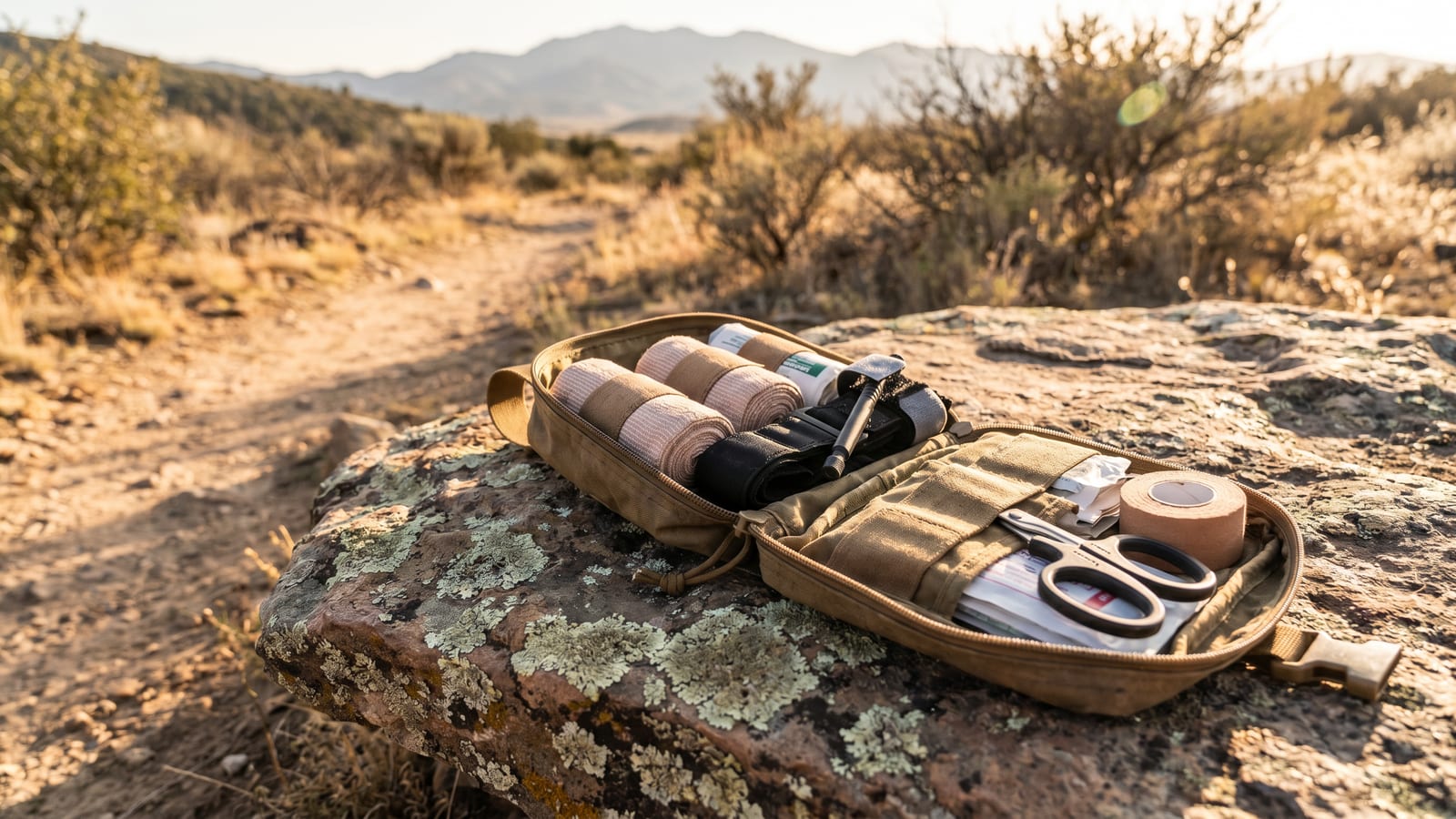
Most people who get hurt outdoors are not saved by anything exotic. They are saved by gauze, tape, and someone who had the sense to pack basic wound supplies. The difference between a manageable injury and a bad situation is usually about ten minutes of packing time before you leave.
This checklist covers what goes in a kit for different trip lengths and scenarios. The goal is to have what you need without carrying a pharmacy into the backcountry.
The Non-Negotiables - What Goes in Every Kit
Before we talk about trip length, every outdoor first-aid kit needs these. These are the items that handle the problems you actually run into, not the dramatic rarities.
Wound cleaning and covering: Antiseptic wipes (at least six), alcohol prep pads (several), assorted adhesive bandages in multiple sizes, sterile gauze pads in both 2x2 and 4x4 inch, medical tape (cloth or waterproof tape holds better than flimsy paper tape), butterfly closures or wound closure strips for deeper cuts.
Pain and blister care: Pain relievers (ibuprofen and acetaminophen, keep them in single-dose packs), antihistamine for allergic reactions and bug bites, blister treatment: moleskin or gel pads. These are the most common backcountry injury and most packs forget them.
Tools and misc: Small scissors for cutting tape and clothing, tweezers for splinters and tick removal, disposable gloves (at least two pairs, you do not want to treat a wound without them), emergency blanket.
Keep all of this in a waterproof bag or hard-sided container. A ziplock is better than nothing, but a sealed dry bag keeps everything readable in wet conditions.
3-Day Trip - Weekend Kit
Build on the basics list and add quantities. When you are out longer, small problems compound. A hot spot on your heel becomes a blister that slows you down. A cut that is not cleaned properly gets infected by day two.
| Item | Quantity | Notes |
|---|---|---|
| Adhesive bandages | 20-30 assorted | Include knuckle and fingertip shapes |
| Gauze pads (4x4) | 6-8 | |
| Antiseptic wipes | 10-15 | |
| Pain relievers | 6-8 doses | Ibuprofen and acetaminophen |
| Antihistamine | 4-6 doses | Benadryl or generic |
| Triple antibiotic ointment | Small tube | Prevents infection in covered wounds |
| Blister treatment | Full sheet/pack | Moleskin or gel pads |
| Elastic bandage (ACE wrap) | One, 3-inch | Sprains and pressure dressing |
| Tick remover | One | Essential in most regions |
Also consider: small insect repellent, travel-size sunscreen, personal medications, hand sanitizer. A blister that forms on day one will ruin day two if you do not treat it immediately when you feel it forming. Stop, clean the area, apply moleskin around (not over) the hot spot, and keep walking.
7-Day Journey - Self-Sufficiency at Scale
A week outdoors means your kit needs to handle bigger issues and larger quantities. You cannot bail out to a pharmacy or call for a resupply. Double and triple the quantities from the 3-day list and add these:
More bandages and dressings: Larger trauma pads (5x9 inch), rolled gauze, a triangular bandage for slings and wrapping large wounds. Fabric adhesive tape instead of paper tape. It holds to damp skin and survives a full day of sweat.
Wound care upgrade: An irrigation syringe (60ml turkey baster-style) for flushing cuts and abrasions. Clean running water through a wound removes debris that antiseptic wipes leave behind. Burn gel or aloe vera for thermal burns. More antibiotic ointment.
Medications: Increased pain relievers and antihistamines, anti-diarrheal medication (Imodium or similar), electrolyte powder packets. If you take prescription medications, bring at least a ten-day extra supply sealed separately from your daily carry.
Tools and support: Trauma shears instead of small scissors. They cut through boot material, straps, and clothing without fumbling. A SAM splint handles sprains and can stabilize suspected fractures. A small roll of duct tape fixes gear, seals blisters, and patches a hundred things. Water purification tablets as a backup to whatever primary treatment you use.
Environment matters here. Hot and humid conditions: double the blister care, add antifungal powder for foot health. Cold environments: extra emergency blankets, chemical hand warmers, and consider that extremity injuries (frostbite, chilblains) look different and require different treatment than standard burns or cuts.
Bug-Out Medical Kit - When Help Is Not Coming
This kit is different from the others. It is not built for trail injuries on a camping trip. It is built for extended self-reliance when professional medical care is unavailable or distant. If you are putting together a serious emergency kit, treat it accordingly.
This list assumes you have basic first aid knowledge or a thorough manual. Without training, some of this gear causes harm. I will say that plainly: a tourniquet applied wrong is worse than no tourniquet. Buy the training before you buy the gear.
Trauma supplies: A quality tourniquet (CAT or SOFTT-W preferred by most tactical medics), Israeli emergency bandage or similar pressure dressing, chest seals for penetrating chest wounds, QuikClot or Celox hemostatic gauze for heavy bleeding. Learn these. The YouTube videos are a starting point. A hands-on class is the actual point.
Wound care: Suture kit or skin stapler (advanced), large quantities of gauze and roller gauze, irrigation capability, strong antiseptics. Sterility matters more here than in regular kits because you may be managing wounds over days without clean facilities.
Medications: Broad-spectrum antibiotics (prescription required, talk to your doctor about a long-term supply), increased over-the-counter pain medications, anti-diarrheals, electrolyte powder. Research shelf life and rotate stock. Expired medications lose potency.
Bone and joint: Multiple SAM splints, additional elastic bandages, Coban self-adherent wrap (sticks to itself, not skin, great for securing dressings without tape).
Dental: Temporary dental filling material, dental mirror, clove oil for toothache relief. Dental emergencies in the field are miserable and will degrade your decision-making faster than almost anything else.
General health and reference: Multivitamins, electrolyte packets, water purification (not just tablets. A filter or purification system for extended use), a thorough first aid manual in a waterproof container, waterproof notebook and pen.
Regularly check and rotate everything. Medications expire. Gloves degrade. Tourniquets left in a hot car for two years may not function. Schedule a review twice a year. Spring and fall work well for swapping expired items, checking seals, and restocking what you used.
Putting Your Kit Together
The right kit is the one you actually carry. A perfectly assembled kit left in the car because it weighs four pounds too much does not help you on the trail.
Start with the basics list. Add quantities for your trip length. Add personal medications. Cut nothing that treats a realistic injury. Add nothing that addresses a statistically improbable event. A SAM splint earns its space. A neck brace does not if you are not doing technical climbing.
Check your kit before every trip. Replace what you used on the last trip. Reseal waterproof containers. Wound care is not the place for creative improvisation. Gauze, tape, and antiseptic have worked for decades for a reason.
Pack it where you can reach it. The kit buried at the bottom of your pack does not help when you need it in thirty seconds.