Tactical
Glock 26 Ride Height and Cant – Setup Guide
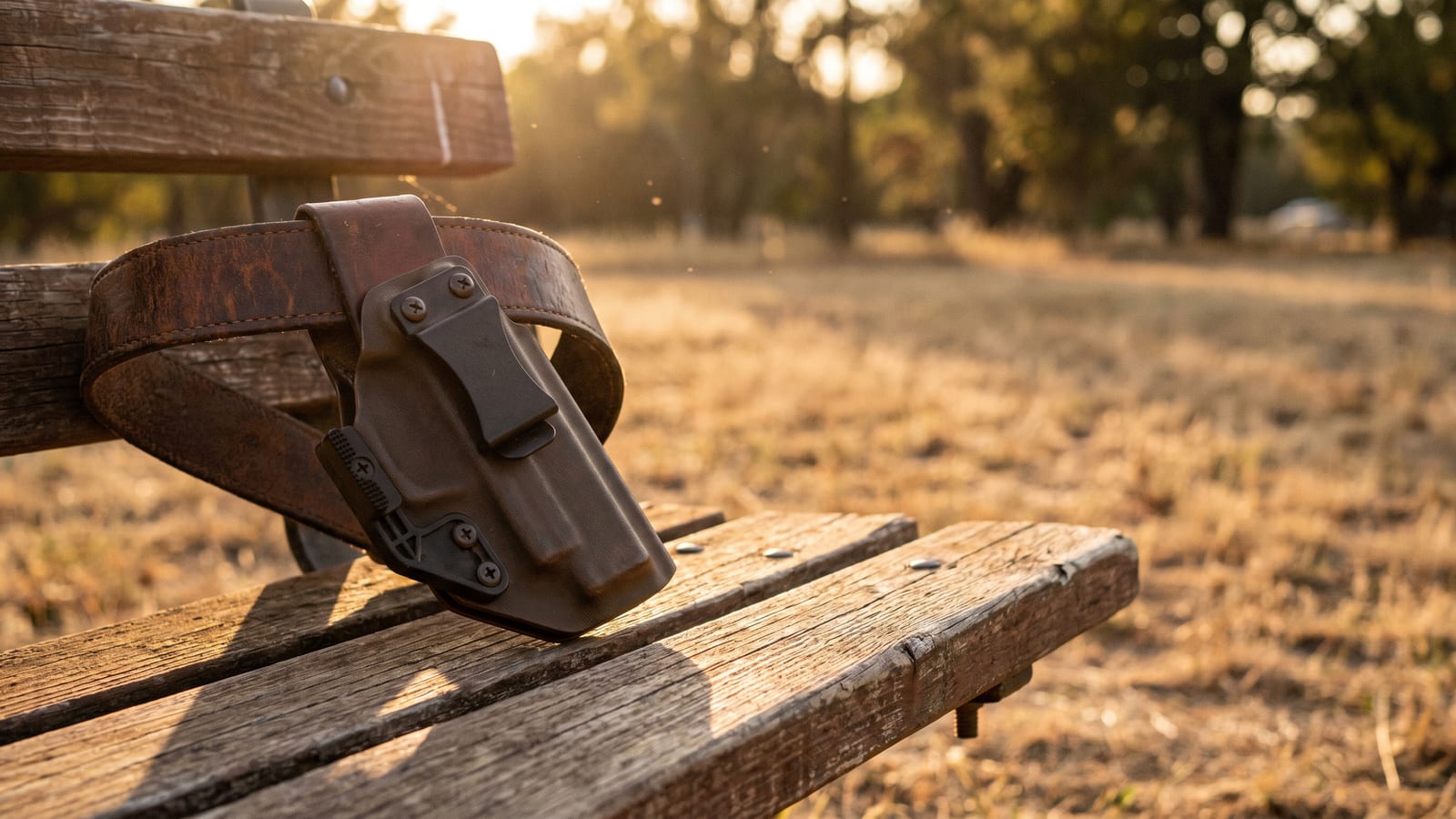
Ride height and cant are two of the most personal adjustments in concealed carry, and they interact with each other in ways that trip up a lot of Glock 26 owners dialing in their glock 26 ride height cant setup. Get them right and the G26 disappears under a t-shirt. Get them wrong and you will feel it in your hip every single step. Here is how to dial in your setup without guessing.
What Ride Height and Cant Actually Mean for Your Glock 26
These are two separate adjustments that do two separate things, and they play off each other.
Ride height is how high or low the Glock 26 sits on your belt. Higher means more of the grip sits above the belt line. Lower means more is buried below it.
Cant is the tilt angle of the holster. Zero cant means the barrel points straight down. Forward cant angles the grip toward your dominant hand. Reverse cant angles it the other way.
The Glock 26 is 6.42 inches tall, which is a short grip to begin with. That matters because every inch of ride height you sacrifice is a bigger deal on a subcompact than it is on a full-size gun.
These two settings are not independent. Change one and you often have to change the other to keep your draw stroke clean.
The Three Ride Height Positions (And Why the G26 Is Different)
Ride height is usually described in clicks or positions on a holster adjustment screw. High, mid, and low translate roughly like this:
- High ride: Three or more fingers of grip above the belt line. Fast draw, prints more.
- Mid ride: Two fingers above the belt. The practical sweet spot for most people.
- Low ride: One finger or less above the belt. Maximum concealment, slower draw for many people.
Here is where the G26-specific problem kicks in. With a mid or low ride on a full-size Glock, you still have plenty of grip above the belt to hook on the draw. On the G26, low ride leaves almost nothing. Your draw hand meets the grip a fraction of a second sooner, which sounds good until you realize you have less surface area to grip and control.
High ride on the G26 is more practical than it is on larger guns. You gain draw speed and grip purchase without giving up much concealment, because the G26 is already a short gun.
Most people should start at mid ride and move up from there if the draw stroke does not feel secure.
Matching Cant Angle to Your Carry Position
Cant angle is not arbitrary. Different carry positions put your hand in different spatial relationships to the gun, and the cant should match that geometry.
- Strong-side hip (3 o’clock): 10 to 15 degrees forward cant. The angle brings the grip closer to your hand as you draw from the holster.
- Appendix AIWB: 0 to 5 degrees forward cant. Your hand comes straight down. Too much forward cant fights your natural reach.
- Behind the hip (4 to 5 o’clock): Up to 20 degrees forward cant. The gun sits behind the widest part of your torso, and the cant helps clear that curve.
- Cross-draw: Reverse cant. You are reaching across your body, so the grip needs to angle toward your support hand.
One thing that comes up constantly in online discussions: reverse cant with low ride. That combination buries the grip into your waistband. Your grip ends up below the belt line, which is not a place a grip should be. Avoid it.
The Interaction Rule: Do Not Set Them Independently
Ride height and cant are connected. Lower ride positions push the gun deeper into your waistline, which changes the angle your hand needs to meet it. If you run a low ride with zero cant, the grip sits straight down into the waistband. You often need more forward cant to pull the grip back toward a usable draw angle.
With the G26, this compounds. Low ride plus extra forward cant to compensate can push the sweat guard into your hip bone, which is not a comfort issue, it is a consistency issue because you will shift the gun every time you sit down.
The rule: start at mid ride with 10 to 15 degrees forward cant. Adjust one variable at a time from there.
How to Find Your Ideal Setup
- Unload the Glock 26 and verify the chamber twice. Safety first.
- Set the holster at mid ride and 10 to 15 degrees forward cant.
- Practice 20 to 30 slow draw strokes over a few days. Watch where your hand meets the grip. If you are reaching or twisting your wrist to find the grip, something is off.
- Make one adjustment at a time. Move the cant 2 to 3 degrees, or change ride height by one click. Do not change both at once or you will not know which one helped.
- Stop adjusting when the grip meets your hand naturally with no wrist compensation. That is your baseline.
- Test it seated, standing, and after walking for 10 minutes. A holster that feels fine standing can be miserable in a car seat or behind a shopping cart.
Common Mistakes to Avoid
- Reverse cant plus low ride. This is the grip-in-the-waistline problem. It is uncomfortable, it slows your draw, and it is fixable by raising the ride height or removing the reverse cant.
- Adding cant to fix a bad ride height. If the ride is too low, the answer is to raise the ride, not to add forward cant until the geometry works on paper but feels wrong in practice.
- One setup for appendix and strong-side. AIWB and 3 o’clock have different optimal cant angles. Move the cant when you move the holster.
- Setting it once and forgetting it. Your body changes. Clothing changes. If you switch from jeans to dress pants, retest your setup. A thicker belt or a new jacket changes the math.
Quick Reference: Recommended Starting Points
| Carry Position | Ride Height | Cant |
|---|---|---|
| Appendix AIWB | Mid to high | 0 to 5 degrees forward |
| Strong-side hip | Mid | 10 to 15 degrees forward |
| Behind-hip 4 to 5 o’clock | Mid to low | 15 to 20 degrees forward |
| Cross-draw | Varies | Reverse |
The Glock 26 punishes small setup mistakes more than most guns because the short grip leaves no margin. Get the ride height and cant right and the G26 vanishes under a shirt. Get it slightly wrong and you will feel the gun with every step.